"I want the unreachable. Other artists paint a bridge, a house, a boat and that's it. I, on the other hand, want to paint the air surrounding the bridge, the house, the boat, the beauty of the air surrounding these objects, and there's nothing impossible about that."
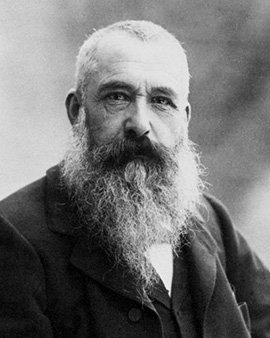
Monet's art was a challenge to the eye of the art viewer at the time it was created: bright colors and motifs from nature instead of contemporary studio painting with its dark colors and artificial-looking lighting, intuitive painting instead of theoretical-looking composition. First underestimated and then famous, Monet became a co-founder of Impressionism and a pioneer of modern painting.
Born in Paris on 14 November 1840, Monet grew up in the port city of Le Havre and showed his artistic talent at an early age. After studying art in Paris, he and a number of other artists founded the group "Société anonyme des artistes, peintres, sculpteurs, graveurs", which also included Auguste Renoir and Paul Cézanne, and created numerous paintings inspired by his travels through Europe and his love of nature. His Garten in Giverny near Paris became Monet's personal paradise and the source of numerous motifs reflected in his famous paintings such as the "Water Lily Pond".
Monet died on 5 December 1926 in Giverny.
 ×
×







 Passionate Customer Service

.jpg "A Pathway in Monet")
.jpg)
.jpg "The Magpie by Claude Monet")
.jpg)
.jpg "Water Lilies by Claude Monet")
.jpg)
.jpg "Impression: Sunrise, 1872 by Claude Monet")
.jpg)
.jpg "Poppy Field by Claude Monet")
.jpg)
 - (MeisterDrucke-239847).jpg "Waterlilies by Claude Monet")
 - (MeisterDrucke-239847).jpg)
.jpg "The Waterlily Pond with the Japanese Bridge by Claude Monet")
.jpg)
.jpg "The Apple Tree by Claude Monet")
.jpg)
.jpg "Effect of Spring, Giverny, 1890 by Claude Monet")
.jpg)
.jpg "Impression, Sunrise by Claude Monet")
.jpg)
.jpg "Road at La Cavée, Pourville by Claude Monet")
.jpg)
.jpg "The Artist")
.jpg)
.jpg "Woman with a Parasol by Claude Monet")
.jpg)
.jpg "The Japanese Footbridge and the Water Lily Pool, Giverny by Claude Monet")
.jpg)
.jpg "The Luncheon: Monet")
.jpg)
.jpg "The Waterlily Pond by Claude Monet")
.jpg)
.jpg "Olive Trees in the Moreno Garden by Claude Monet")
.jpg)
.jpg "Landscape on Saint-Martin Island by Claude Monet")
.jpg)
.jpg "The Water Lily Pond, Green Reflections by Claude Monet")
.jpg)
.jpg "Poppies at Argenteuil by Claude Monet")
.jpg)
.jpg "The Gare Saint-Lazare: Arrival of a Train by Claude Monet")
.jpg)
.jpg "Path in the Wheat at Pourville, 1882 by Claude Monet")
.jpg)
.jpg "The Geese by Claude Monet")
.jpg)
.jpg "Water Lilies by Claude Monet")
.jpg)
 1914-18 (see also 64185 64186) - (MeisterDrucke-96418).jpg "The Waterlilies - The Clouds (right side), 1914-18 by Claude Monet")
 1914-18 (see also 64185 64186) - (MeisterDrucke-96418).jpg)
.jpg "Bouquet of Sunflowers, 1881 by Claude Monet")
.jpg)
.jpg "Water Lilies, the Cloud by Claude Monet")
.jpg)
.jpg "Vase of Flowers by Claude Monet")
.jpg)
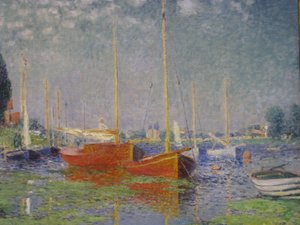
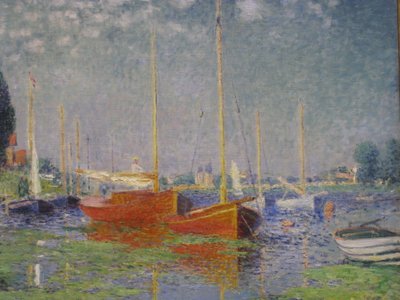
.jpg "Red Boats, Argenteuil by Claude Monet")
.jpg)
.jpg "The Sailing Boat, Evening Effect by Claude Monet")
.jpg)
.jpg "The Artist")
.jpg)
.jpg "White Waterlilies by Claude Monet")
.jpg)
.jpg "Bridge in Monet")
.jpg)
.jpg "Garden in Giverny by Claude Monet")
.jpg)
.jpg "Quai du Louvre by Claude Monet")
.jpg)
.jpg "Tulip Fields with the Rijnsburg Windmill by Claude Monet")
.jpg)
.jpg "The Japanese Bridge by Claude Monet")
.jpg)
.jpg "The Fisherman")
.jpg)
.jpg "Cliff Walk at Pourville by Claude Monet")
.jpg)
 Water-Lilies - (MeisterDrucke-21577).jpg "Water-Lilies (")
 Water-Lilies - (MeisterDrucke-21577).jpg)
 c1865 - (MeisterDrucke-76268).jpg "The Road to Bas-Breau, Fontainebleau (Le Pave de Chailly) by Claude Monet")
 c1865 - (MeisterDrucke-76268).jpg)
 1873 - (MeisterDrucke-126917).jpg "The Artist")
 1873 - (MeisterDrucke-126917).jpg)
 - (MeisterDrucke-179768).jpg "Waterlilies, Evening by Claude Monet")
 - (MeisterDrucke-179768).jpg)
.jpg "Wheat Field by Claude Monet")
.jpg)
.jpg "Sunset on the Seine at Lavacourt, Winter Effect by Claude Monet")
.jpg)
.jpg "The Magpie by Claude Monet")
.jpg)
.jpg "Haystacks by Claude Monet")
.jpg)
.jpg "Waterlilies at Sunset by Claude Monet")
.jpg)
.jpg "A Corner of the Garden at Montgeron, 1876-7 by Claude Monet")
.jpg)
.jpg "Poppy Field, 1873 by Claude Monet")
.jpg)
.jpg "The Cliff, Étretat, Sunset by Claude Monet")
.jpg)
.jpg "Woman with Parasol Turned to the Left, 1886 by Claude Monet")
.jpg)
.jpg "Impression, Sunrise, 1872 by Claude Monet")
.jpg)
.jpg "The Garden at Giverny, 1900 by Claude Monet")
.jpg)
.jpg "Forest of Fontainebleau by Claude Monet")
.jpg)
.jpg "On the High Seas, Sunset at Pourville by Claude Monet")
.jpg)
.jpg "Ice at Bennecourt by Claude Monet")
.jpg)
.jpg "Lady in the Garden by Claude Monet")
.jpg)
.jpg "View of Vétheuil. 1880 by Claude Monet")
.jpg)
.jpg "The Water-Lily Pond by Claude Monet")
.jpg)
.jpg "The Grand Canal by Claude Monet")
.jpg)
.jpg "Poplars on the River Seine by Claude Monet")
.jpg)
.jpg "Still Life by Claude Monet")
.jpg)
.jpg "The Roses, 1925-26 by Claude Monet")
.jpg)
.jpg "Antibes, Le Fort by Claude Monet")
.jpg)
.jpg "The Magpie by Claude Monet")
.jpg)
.jpg "Bordighera by Claude Monet")
.jpg)
.jpg "The Water Lily Pond, Evening by Claude Monet")
.jpg)
.jpg "Landscape, The Parc Monceau by Claude Monet")
.jpg)
.jpg "Le Rio de la Salute, 1908 by Claude Monet")
.jpg)
.jpg "Waterlilies: Green Reflections by Claude Monet")
.jpg)
 - (MeisterDrucke-62136).jpg "Waterlilies: Morning, 1914-18 (left section) by Claude Monet")
 - (MeisterDrucke-62136).jpg)
.jpg "The Terrace at Sainte-Adresse by Claude Monet")
.jpg)
.jpg "The Artist")
.jpg)
.jpg "The Magpie by Claude Monet")
.jpg)
.jpg "Water Lilies by Claude Monet")
.jpg)
.jpg "Water Lilies by Claude Monet")
.jpg)
.jpg "Waterlilies with Weeping Willows by Claude Monet")
.jpg)
.jpg "Train in the Snow or The Locomotive by Claude Monet")
.jpg)
.jpg "Poppy Field, 1887 by Claude Monet")
.jpg)
.jpg "The Ice Floes, 1880 by Claude Monet")
.jpg)
.jpg "Reflections of Clouds on the Water-Lily Pond by Claude Monet")
.jpg)
.jpg "Wisteria by Claude Monet")
.jpg)
.jpg "Water Lilies at Giverny by Claude Monet")
.jpg)
.jpg "Water Lilies by Claude Monet")
.jpg)
.jpg "Water Lilies by Claude Monet")
.jpg)
_1916-19_-_(MeisterDrucke-804915).jpg "Water Lilies (Nymphéas). 1916-19 by Claude Monet")
_1916-19_-_(MeisterDrucke-804915).jpg)
.jpg "Water Lilies by Claude Monet")
.jpg)
.jpg "The Apple Tree, 1879 by Claude Monet")
.jpg)
.jpg "View of Vétheuil, Summer by Claude Monet")
.jpg)
.jpg "View of Vetheuil by Claude Monet")
.jpg)
.jpg "View at Rouelles by Claude Monet")
.jpg)
.jpg "Arm of the Seine near Vétheuil by Claude Monet")
.jpg)
.jpg "Poppies at Argenteuil by Claude Monet")
.jpg)
 - (MeisterDrucke-21502).jpg "Haystacks (Sunset) by Claude Monet")
 - (MeisterDrucke-21502).jpg)
.jpg "Water Lilies by Claude Monet")
.jpg)
.jpg "Cliff and Porte d")
.jpg)
.jpg "Waterlilies by Claude Monet")
.jpg)
.jpg "The Beach at Pourville, Setting Sun, 1882 by Claude Monet")
.jpg)

 +43 4257 29415
 support@meisterdrucke.com
 Mo-Do: 7:00 - 16:00 | Fr: 7:00 - 13:00