support@meisterdrucke.com  ·  0043 4257 29415

Deutsch English Italiano Español Français Nederlands Português Svenska Polski Dansk
Search by artist, work title or style – e.g. Monet, Starry Night, Impressionism, Hokusai wave, nude. Describe the scene – e.g. green meadow, abstract with lots of red, dark oil painting, standing nude next to a tree.
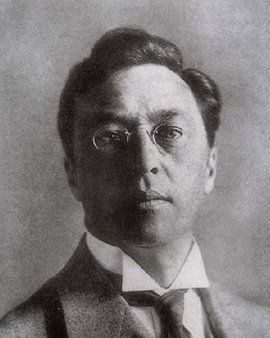
Wassily Kandinsky

Kandinsky makes colors sing and forms dance - his abstract compositions are visual music, inspiring the spirit and transcending the boundaries of the visible.


Discover artworks now!
Österreichische Kunstmanufaktur Erfahrungen & Bewertungen zu Meisterdrucke auf ProvenExpert.com
Wassily Kandinsky
Passionate Customer Service
Museum Quality Art Prints
Individual Customization Options
Österreichische Kunstmanufaktur Passionate Customer Service
Museum Quality Art Prints
Individual Customization Options

Wassily Kandinsky

Russian Federation · 1866–1944 · Expressionism, Symbolism, Abstract Art, Bauhaus · 1678 artworks found
Kandinsky makes colors sing and forms dance - his abstract compositions are visual music, inspiring the spirit and transcending the boundaries of the visible. more about the artist
Wassily Kandinsky
1866–1944
Born December 5, 1866 (Moskau)
Died December 13, 1944 (Neuilly-sur-Seine) at the age of 78
Nationality Russian Federation
Epochs Expressionism, Symbolism, Abstract Art, Bauhaus
Genre landscape
Profession painter, university teacher, art theorist, teacher, illustrator, graphic artist, architectural drafter, scenographer, designer, sculptor, draftsperson, writer
Family
Spouse: Nina Kandinsky
Teacher Franz von Stuck, Anton Ažbe, Josef Albers, Luigi Iorini
Student Sten Djurberg
Influenced by Richard Wagner, Claude Monet, Edvard Munch, Vincent van Gogh, Henri Matisse, Pablo Picasso, Les Meules, Lohengrin, Helena Petrovna Blavatsky, Pointillismus, Fauvismus, Blue Rose, Musik, Walter Gropius, Rudolf Steiner
Memberships Die Blaue Vier, Der Blaue Reiter
Notable works Composition VII (1913), Der Blaue Reiter (1903), Composition VI (1913), Auf Weiss II (1923), Gelb-Rot-Blau (1925)
Museums Staedtische Galerie im Lenbachhaus, Staatliche Museen zu Berlin, Bayerische Staatsgemaeldesammlungen (Pinakothek), Staedel Museum, Staatliche Kunsthalle Karlsruhe
Wassily Kandinsky

Wassily Kandinsky

    December 16, 1866   -   December 13, 1944

Born in Moscow in 1866, Wassily Kandinsky was already thirty years old when his personal artistic approach influenced an entire generation of artists in Germany and France. He studied law at the University of Moscow at an early age and distinguished himself with various writings and a dissertation on social issues. After turning down an offer of a professorship at an Estonian university, he moved to Munich and began studying with Franz von Stuck at the Munich Art Academy in 1900. Just a few years later he was teaching as a teacher at a private art school.

Kandinsky did a lot of intellectual work on the "spiritual in art", which also brought him in 1902 in contact with the 'Berlin Secession', an artists' association around the painters Klimsch, Leistikow, Liebermann, Slevogt, Corinth, Beckmann, Barlach and Feininger. The art business in this epoch resembled a time characterized by painting towards nature themes, but also with breaks towards abstraction, so that divergences and differences about what was worth exhibiting were not absent. Thus, in 1906 he founded and exhibited together with the group 'Die Brücke' in Dresden, followed in 1907 in Munich by the 'Neue Künstlervereinigung', from which - together with Franz Marc as pioneers and at the top - the group of the 'Blauer Reiter' emerged. Trips to Paris and Italy brought Kandinsky into contact with the stylistic efforts there, with Cubism and Fauvism, and contributed to the fact that his thinking was increasingly concerned with the substantial question of modern art, namely the function of the image in a world that had fallen into materialism.

All conventional pictorial means did not seem to him immaterial enough to abolish the materiality of reality. For Kandinsky, only music could thus overcome this materiality without having to lean on the representational. His paintings became increasingly non-representational, and thus an independent new orientation towards differentiated color play and rhythmicized forms emerged. Exhibitions of his works in Munich, Zurich, the U.S., and Moscow attest to the restless, yet always agile artist in search of something new, also in search of self-discovery. After stations in Moscow and Berlin, he moved to Weimar in 1922 and became a teacher at the Bauhaus there at the invitation of Walter Gropius. He meets other important artists such as Lyonel Feininger, and he founds with Paul Klee and the Russian painter Jawlensky the artist group 'The Blue Four'.

When the Bauhaus closes in 1933, Kandinsky moves to Paris. There he meets other important artists such as Robert Delaunay, Fernand Léger, Joan Miro, Piet Mondrian and Hans Arp. In 1937 the National Socialists defame his works. Over 57 paintings are confiscated and removed from German museums.

Artworks by Wassily Kandinsky

1678 artworks found
Filters / Sorting
Sort by

Filter settings

Display settings
1.678 artworks found

Wassily Kandinsky
Jaune Rouge Bleu
1925 | oil on canvas

Choose picture

Wassily Kandinsky
Intersecting Lines, 1923
1923 | oil on canvas

Choose picture

Wassily Kandinsky
Composition VIII Painting by Vas...
1923 | paint

Choose picture

Wassily Kandinsky
Empor
1929 | painting

Choose picture
Wassily Kandinsky
Choose picture


Wassily Kandinsky
Komposition VII
1913 | painting

Choose picture

Wassily Kandinsky
Aquarell Nr. 326
1928 | watercolor

Choose picture

Wassily Kandinsky
 
1927 | oil on canvas

Choose picture

Wassily Kandinsky
Composition, 1930 (wc and indian...
1930 | watercolour and indian ink

Choose picture

Wassily Kandinsky
Kreise in einem Kreis. 1923
Undated | oil on canvas

Choose picture

Wassily Kandinsky
Dominante Kurve (Courbe dominant...
Undated | oil on canvas

Choose picture

Wassily Kandinsky
Gelb – Rot – Blau
1925 | painting

Choose picture

Wassily Kandinsky
Several Circles, 1926
Undated |

Choose picture

Wassily Kandinsky
 
1908 | oil on board

Choose picture

Wassily Kandinsky
Blau (Blue), 1922
1922 | color lithograph

Choose picture
Wassily Kandinsky
Choose picture


Wassily Kandinsky
On White II, 1923
1923 | oil on canvas

Choose picture

Wassily Kandinsky
Houses in Munich, 1908 (oil on c...
1908 | oil on cardboard

Choose picture

Wassily Kandinsky
Komposition VIII
1923 | painting

Choose picture

Wassily Kandinsky
In the Grey, 1919
1919 | oil on canvas

Choose picture

Wassily Kandinsky
Abstract Horse, 1911
1911 | oil on canvas

Choose picture

Wassily Kandinsky
Whimsical, 1930 (oil on cardboard)
1930 | oil on cardboard

Choose picture

Wassily Kandinsky
 
1908 | Oil on cardboard

Choose picture

Wassily Kandinsky
Rapallo, Blick auf Portofino. Um...
Undated | Öl/Leinwandkarton

Choose picture

Wassily Kandinsky
Circles in a Circle, 1923.
Undated |

Choose picture

Wassily Kandinsky
Zarte Spannung Delicate Tension ...
Undated |

Choose picture

Wassily Kandinsky
Blaues Bild. 1924
Undated | oil on canvas

Choose picture

Wassily Kandinsky
Free Curve to the Point - Accomp...
1925 | ink

Choose picture

Wassily Kandinsky
Aquarell Nr. 606
1923 | watercolor

Choose picture

Wassily Kandinsky
Reitendes Paar
1907 | painting

Choose picture

Wassily Kandinsky
Accent en Rose, 1926
1926 | oil on canvas

Choose picture

Wassily Kandinsky
Vermindertes Gewicht
1928 | watercolor

Choose picture

Wassily Kandinsky
Komposition 8. 1923
Undated | oil on canvas

Choose picture

Wassily Kandinsky
Colorful in the triangle
Undated |

Choose picture

Wassily Kandinsky
Composition No. 224, 1920
1920 | oil on canvas

Choose picture

Wassily Kandinsky
Leger, Abstract Art, 1930 (oil o...
1930 | Oil on cardboard

Choose picture

Wassily Kandinsky
Landscape with a Green House, 19...
1908 | oil painting

Choose picture

Wassily Kandinsky
 
1909 | oil on canvas

Choose picture

Wassily Kandinsky
 
1929 | watercolour, pen and cooured inks on paper

Choose picture

Wassily Kandinsky
Helles Bild
1913 | painting

Choose picture

Wassily Kandinsky
Lyrisches
1911 | painting

Choose picture
Wassily Kandinsky
Choose picture


Wassily Kandinsky
Composition with Circles and Lin...
1926 | oil on canvas

Choose picture

Wassily Kandinsky
Counterweights, 1926
1926 |

Choose picture

Wassily Kandinsky
Gewebe, 1923.
Undated |

Choose picture
Wassily Kandinsky
Choose picture


Wassily Kandinsky
Himmelblau
1940 | painting

Choose picture

Wassily Kandinsky
Im schwarzen Viereck
1923 | painting

Choose picture

Wassily Kandinsky
Murnau-Blick über den Staffelsee
1908 | painting

Choose picture

Wassily Kandinsky
Landschaft
1913 | painting

Choose picture

Wassily Kandinsky
Zickzack in die Höhe
1928 | watercolor

Choose picture

Wassily Kandinsky
Fragil
1931 | painting

Choose picture
Wassily Kandinsky
Choose picture


Wassily Kandinsky
Color Study. Squares with Concen...
Undated |

Choose picture

Wassily Kandinsky
In Blue, 1925
1925 | oil on canvas

Choose picture

Wassily Kandinsky
Grey Circle, 1923 (wc & ink on w...
1923 | watercolour and ink on wove paper

Choose picture

Wassily Kandinsky
Sketch for Several Circles, 1926...
1926 | oil on paper laid on canvas

Choose picture

Wassily Kandinsky
 
1923 | oil on canvas

Choose picture

Wassily Kandinsky
Durchgehender Strich
1923 | painting

Choose picture

Wassily Kandinsky
Composition IX, 1936
1936 | oil on canvas

Choose picture

Wassily Kandinsky
Untitled, 1930 (pen and ink on p...
1930 | Ink and pen on paper

Choose picture

Wassily Kandinsky
Green Composition, 1923
1923 | oil on canvas

Choose picture

Wassily Kandinsky
Vertiefte Regung Deepened Impuls...
Undated |

Choose picture

Wassily Kandinsky
Murnau, 1909 (oil)
1909 | oil

Choose picture
Wassily Kandinsky
Choose picture


Wassily Kandinsky
Bleu de Ciel
1940 | oil on canvas

Choose picture

Wassily Kandinsky
Ohne Titel
1928 | watercolor

Choose picture

Wassily Kandinsky
Zarter Aufstieg (Montée gracieus...
Undated | oil on canvas

Choose picture

Wassily Kandinsky
Improvisation Klamm, 1914.
Undated |

Choose picture

Wassily Kandinsky
 
1929 | watercolour pen and india ink on Paper

Choose picture

Wassily Kandinsky
Launisch, 1930
Undated |

Choose picture
Wassily Kandinsky
Choose picture


Wassily Kandinsky
Saint George I, 1911.
Undated |

Choose picture

Wassily Kandinsky
""Etude de paysage en automne av...
1908 |

Choose picture

Wassily Kandinsky
Weißes Zentrum. 1921
Undated | oil on canvas

Choose picture

Wassily Kandinsky
Bilder einer Ausstellung, Figur ...
1930 | watercolor

Choose picture

Wassily Kandinsky
Häuser in München
1908 | painting

Choose picture

Wassily Kandinsky
Landscape with an Apple Tree, 1906
1906 | oil on canvas

Choose picture

Wassily Kandinsky
Eisenbahn bei Murnau
1909 | painting

Choose picture

Wassily Kandinsky
Amazons with Lions, 1918 (oil on...
1918 | oil on cardboard

Choose picture

Wassily Kandinsky
Ununterbrochene Linie. Ca. 1922-44
Undated |

Choose picture

Wassily Kandinsky
Grey Square, 1923 (pen und ink a...
1923 | pen and ink and watercolour

Choose picture

Wassily Kandinsky
Diagonale
1923 | painting

Choose picture

Wassily Kandinsky
 
1937 | oil on canvas

Choose picture

Wassily Kandinsky
Dominant Violet, 1934 (oil and s...
1934 | oil and sand on canvas

Choose picture

Wassily Kandinsky
 
Undated |

Choose picture

Wassily Kandinsky
 
1925 |

Choose picture

Wassily Kandinsky
Intermingling, 1928 (gouache und...
1928 | Gouache and watercolour

Choose picture

Wassily Kandinsky
Fröhlicher Aufstieg
1923 | printmaking

Choose picture

Wassily Kandinsky
Improvisation Sintflut
1913 | painting

Choose picture

Wassily Kandinsky
Bow and Arrow, 1927
1927 | oil on canvas

Choose picture

Wassily Kandinsky
Quer und Hoch
1927 | watercolor

Choose picture

Wassily Kandinsky
Im Grau
1919 | painting

Choose picture
Wassily Kandinsky
Choose picture


Wassily Kandinsky
 
1930 | oil on board

Choose picture

Wassily Kandinsky
Schwere Kreise
1927 | painting

Choose picture

Wassily Kandinsky
Blauer Kreis
1922 | painting

Choose picture

Wassily Kandinsky
Summer Landscape, 1909 (oil on c...
1909 | oil on cardboard

Choose picture

Wassily Kandinsky
Entwurf 3 zu Komposition VII
1913 | painting

Choose picture

Wassily Kandinsky
Skizze (Reiter)
1909 | painting

Choose picture

Wassily Kandinsky
Gegengewichte
1926 | painting

Choose picture

Wassily Kandinsky
""Launisch"" (capricieux) Peintu...
1930 |

Choose picture

Wassily Kandinsky
Improvisation No. 19, 1911
1911 | oil on canvas

Choose picture

Wassily Kandinsky
Untitled par Kandinsky, Wassily ...
1916 |

Choose picture

Wassily Kandinsky
Empor. 1929
Undated | oil on cardboard

Choose picture

Wassily Kandinsky
Im Park von Saint Cloud
1906 | painting

Choose picture

Wassily Kandinsky
 
1914 | oil on canvas

Choose picture


Page 1 / 17

About the artist

Wassily Kandinsky
Wassily Kandinsky
1866–1944
BornDecember 5, 1866 (Moskau)
DiedDecember 13, 1944 (Neuilly-sur-Seine) at the age of 78
NationalityRussian Federation
EpochsExpressionism, Symbolism, Abstract Art, Bauhaus
Genrelandscape
Professionpainter, university teacher, art theorist, teacher, illustrator, graphic artist, architectural drafter, scenographer, designer, sculptor, draftsperson, writer
Family
Spouse: Nina Kandinsky
TeacherFranz von Stuck, Anton Ažbe, Josef Albers, Luigi Iorini
StudentSten Djurberg
Influenced byRichard Wagner, Claude Monet, Edvard Munch, Vincent van Gogh, Henri Matisse, Pablo Picasso, Les Meules, Lohengrin, Helena Petrovna Blavatsky, Pointillismus, Fauvismus, Blue Rose, Musik, Walter Gropius, Rudolf Steiner
MembershipsDie Blaue Vier, Der Blaue Reiter
Notable worksComposition VII (1913), Der Blaue Reiter (1903), Composition VI (1913), Auf Weiss II (1923), Gelb-Rot-Blau (1925)
MuseumsStaedtische Galerie im Lenbachhaus, Staatliche Museen zu Berlin, Bayerische Staatsgemaeldesammlungen (Pinakothek), Staedel Museum, Staatliche Kunsthalle Karlsruhe

Born in Moscow in 1866, Wassily Kandinsky was already thirty years old when his personal artistic approach influenced an entire generation of artists in Germany and France. He studied law at the University of Moscow at an early age and distinguished himself with various writings and a dissertation on social issues. After turning down an offer of a professorship at an Estonian university, he moved to Munich and began studying with Franz von Stuck at the Munich Art Academy in 1900. Just a few years later he was teaching as a teacher at a private art school.

Kandinsky did a lot of intellectual work on the "spiritual in art", which also brought him in 1902 in contact with the 'Berlin Secession', an artists' association around the painters Klimsch, Leistikow, Liebermann, Slevogt, Corinth, Beckmann, Barlach and Feininger. The art business in this epoch resembled a time characterized by painting towards nature themes, but also with breaks towards abstraction, so that divergences and differences about what was worth exhibiting were not absent. Thus, in 1906 he founded and exhibited together with the group 'Die Brücke' in Dresden, followed in 1907 in Munich by the 'Neue Künstlervereinigung', from which - together with Franz Marc as pioneers and at the top - the group of the 'Blauer Reiter' emerged. Trips to Paris and Italy brought Kandinsky into contact with the stylistic efforts there, with Cubism and Fauvism, and contributed to the fact that his thinking was increasingly concerned with the substantial question of modern art, namely the function of the image in a world that had fallen into materialism.

All conventional pictorial means did not seem to him immaterial enough to abolish the materiality of reality. For Kandinsky, only music could thus overcome this materiality without having to lean on the representational. His paintings became increasingly non-representational, and thus an independent new orientation towards differentiated color play and rhythmicized forms emerged. Exhibitions of his works in Munich, Zurich, the U.S., and Moscow attest to the restless, yet always agile artist in search of something new, also in search of self-discovery. After stations in Moscow and Berlin, he moved to Weimar in 1922 and became a teacher at the Bauhaus there at the invitation of Walter Gropius. He meets other important artists such as Lyonel Feininger, and he founds with Paul Klee and the Russian painter Jawlensky the artist group 'The Blue Four'.

When the Bauhaus closes in 1933, Kandinsky moves to Paris. There he meets other important artists such as Robert Delaunay, Fernand Léger, Joan Miro, Piet Mondrian and Hans Arp. In 1937 the National Socialists defame his works. Over 57 paintings are confiscated and removed from German museums.


What our customers think about us


Frequently Asked Questions about Meisterdrucke


Personalizing your art print at Meisterdrucke is simple and intuitive: Choose a frame, set the image size, pick a printing medium, and add suitable glazing or a stretcher frame. We also offer additional customization options like mats, fillets, and spacers. If you have any questions, our customer service team is ready to help you create your perfect artwork.

At Meisterdrucke, you can visualize your configured artwork directly in your own room. Simply upload a photo of your space and see how the artwork looks in it. If you're visiting us on a mobile device — phone or tablet — our augmented reality feature brings the picture to life and projects it right into your room. A unique experience that combines art and technology.

Choosing the right medium is often a matter of personal taste. To give you a better idea, we've provided some images for each medium. We also offer a sample set of all paper variants, so you can decide not just visually but by touch as well. You can order the sample set free of charge — only shipping costs apply.

Don't worry! At Meisterdrucke, we don't just process orders mechanically. Every order is manually reviewed by our team. If we spot any inconsistencies or issues with your configuration, we'll get in touch with you right away. And of course, our friendly and patient support team is always here to help you with your configuration. We'll work with you by phone or email to adjust your image so the final result is exactly what you had in mind.


Still have questions?

Are you interested in an art print from our manufactory but still unsure? Do you need advice on choosing the medium or help with the order?

Our experts are happy to assist you.

+43 4257 29415
support@meisterdrucke.com
Mo-Do: 7:00 - 16:00 | Fr: 7:00 - 13:00
Still have questions?

Are you interested in an art print from our manufactory but still unsure? Do you need advice on choosing the medium or help with the order?

Our experts are happy to assist you.

+43 4257 29415
support@meisterdrucke.com
Mo-Do: 7:00 - 16:00 | Fr: 7:00 - 13:00


Meisterdrucke

   Kärntner Strasse 46
        9586 Finkenstein am Faaker See
        Austria
        +43 4257 29415
        support@meisterdrucke.com
Other languages

                   
Erfahrungen & Bewertungen zu Meisterdrucke
Post.at DHL Express Quehenberger Cargoboard
Kaiser Franz Joseph

Meisterdrucke
Kärntner Strasse 46
9586 Finkenstein am Faaker See · Austria
+43 4257 29415 · office@meisterdrucke.com
Post.at DHL Express Quehenberger Cargoboard


(c) 2026 meisterdrucke.us