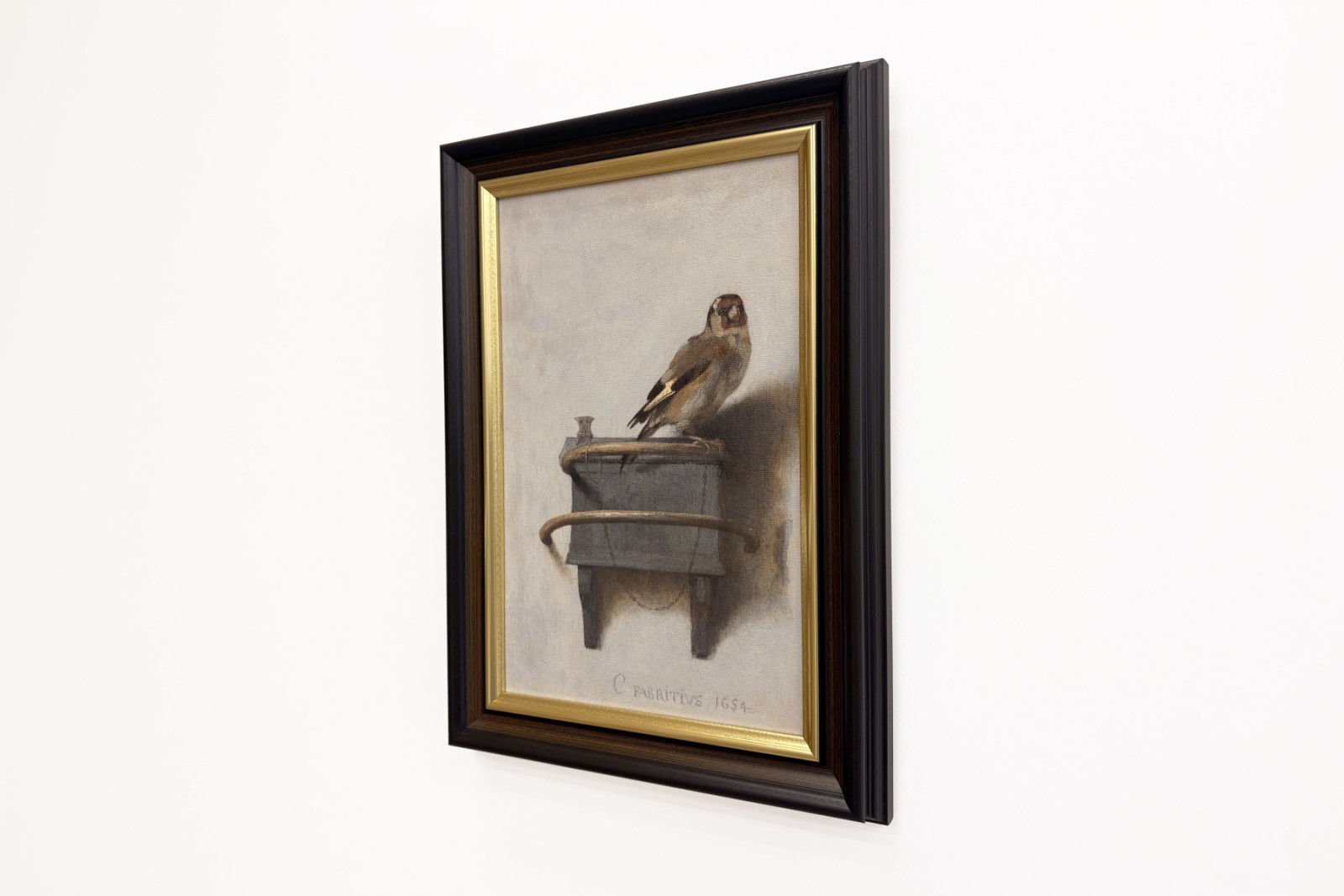
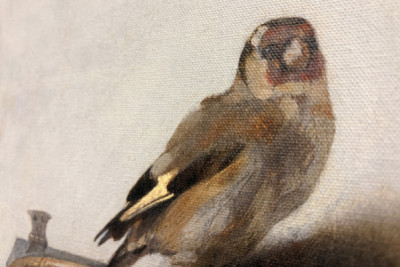
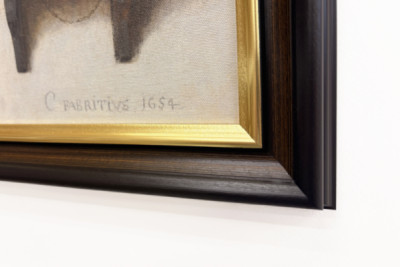
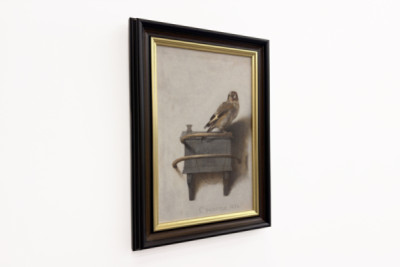
A delicate chain hangs down from the bird’s leg and disappears into the semi-darkness beneath the bird feeder - barely thicker than a pencil stroke, and yet it conveys the whole story of the picture. The goldfinch perches on the top perch of its feeder, its head turned slightly, its red face and yellow wing stripe the only bold colours against a pale, mottled wall. Carel Fabritius painted it in 1654, the same year that the Delft gunpowder explosion killed the painter at the age of just 32 and destroyed a large part of his oeuvre - the little bird is one of the few panels to have survived. Fabritius was Rembrandt’s most gifted pupil, but he forged his own path: light backgrounds instead of dark ones, a dark subject against a light background. The chained finch, once a popular pet that had learnt to fetch water with a tiny bucket, appears in this still life neither cute nor anecdotal, but strangely serious. At the bottom, the signature ‘C FABRITIVS 1654’ appears in fine grey script against the light background, clearly legible right down to the last digit.
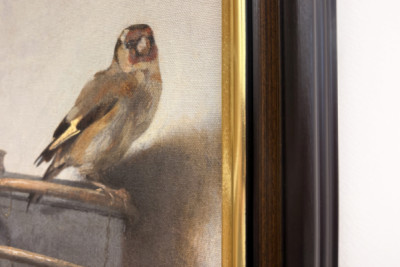
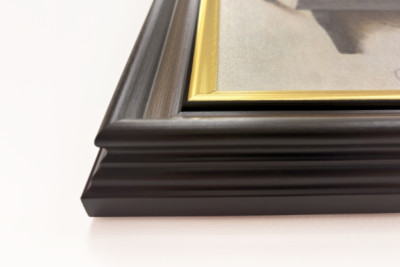
The satin-finished surface of ‘Leonardo’ behaves in this version exactly as the subject demands: Viewed head-on, the surface remains calm and almost matt; only when one walks past the piece from the side does a soft sheen settle over the light wall background - not a reflection, but rather a brightening that keeps the grey-beige surface alive. It is striking how differently the picture and the frame react to the same light: the narrow gold edge of Lychorida casts a harsh reflection, the black profile next to it absorbs almost everything, and in between sits the painted surface with its subdued sheen, like a third, distinct level of light. The light-brown hollow mediates between the gold and the black without imposing itself. One might argue that such a small format would have benefited from a more understated frame - yet, upon viewing the finished work, it is precisely this contrast that is so compelling. If one steps closer, the oblique light subtly highlights the structure of the support beneath the plumage, and the bird takes on a tangible physicality - this interplay of dull black, glinting edges and a silky, tranquil picture surface makes this small piece on the wall astonishingly present.
 ×
×






 +43 4257 29415
 support@meisterdrucke.com
 Mo-Do: 7:00 - 16:00 | Fr: 7:00 - 13:00