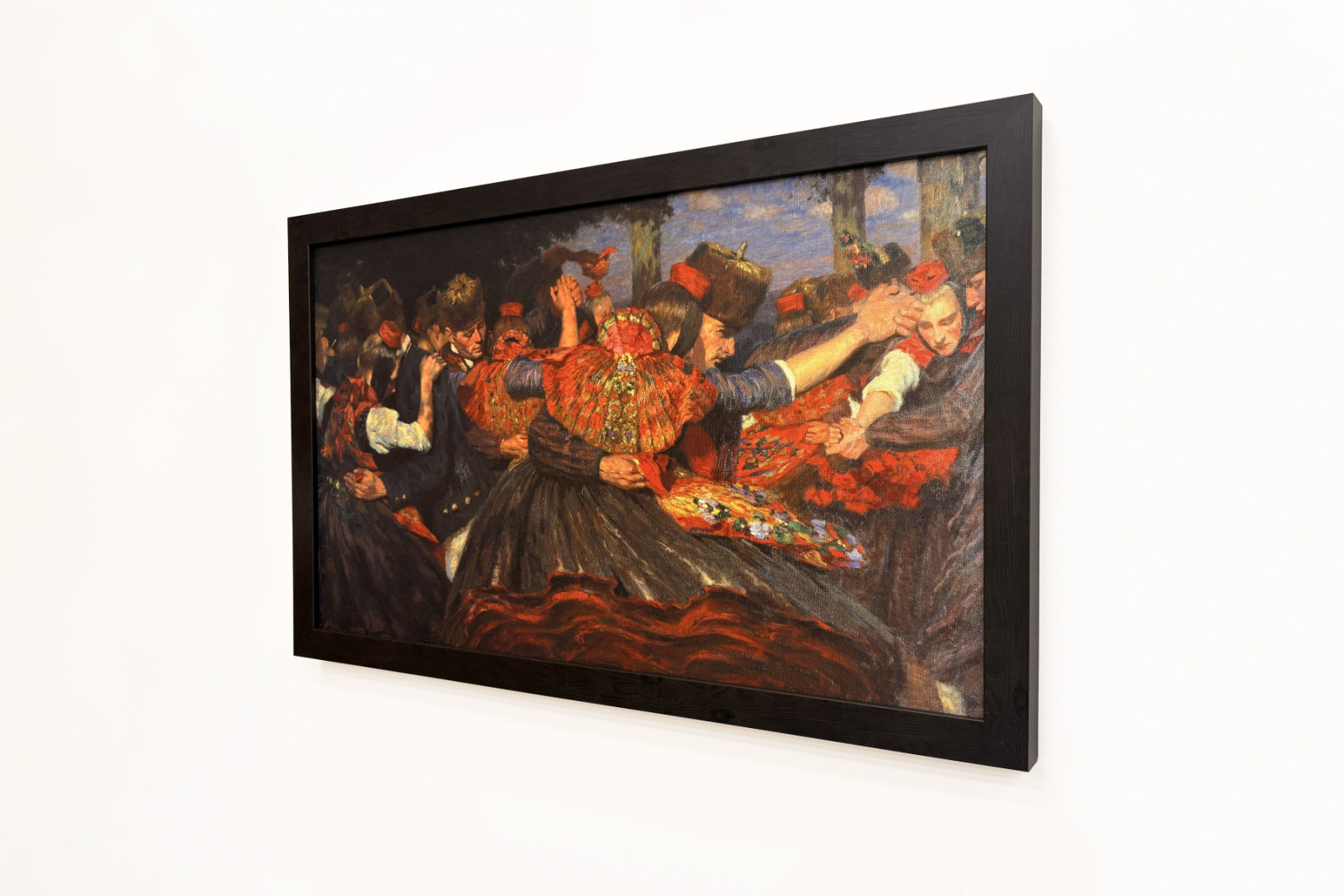
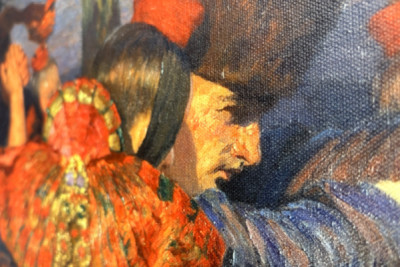
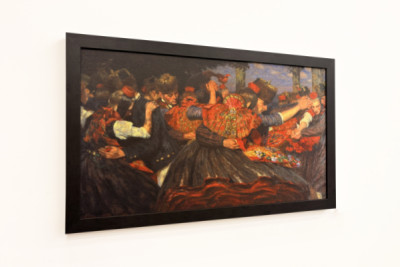
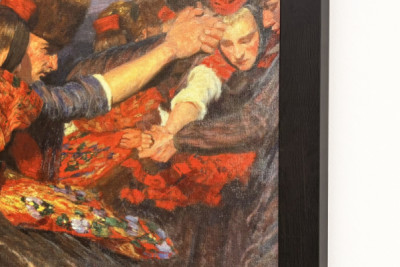
This image plunges us right into the whirl: Couples in Schwalm traditional dress whirl so close together that there is barely any space between them - black skirts swing out, red scarves and bonnets glow like embers amongst them, and only above, between the tree trunks, does a strip of pale blue sky open up. Carl Bantzer, who around 1900 was one of the leading painters of the Willingshausen artists’ colony, studied rural life in the Hessian Schwalm region for decades; this dance was painted in 1898, and the composition reveals a deep familiarity with the subject. No one is posing here; the men in their fur caps look focused, almost serious, whilst the women have their backs turned to us - one does not stand in front of the scene, but almost within it. The embroidered shawls become shimmering fields of colour in red, gold and green, whilst the black of the skirts carries the movement. This painting lies exactly midway between a folklore document and modern painting: the traditional costume is precisely observed, yet the brushwork is already impressionistic, using patches and sweeping strokes rather than contours.
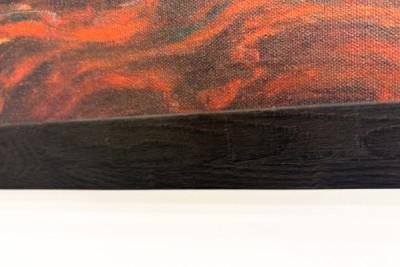
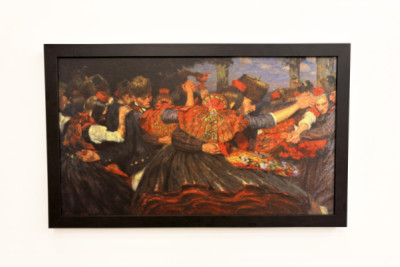
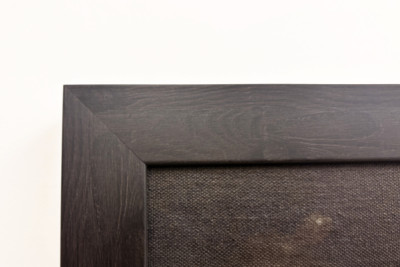
On the wall, the landscape format measuring 68 x 39 cm appears larger than the figures suggest - the dance stretches across the room like a broad ribbon, and because the figures are cropped, the throng on the left and right seems to continue beyond the frame. Even from a few metres away, the red traditional shawls stand out; the faces only become visible as you draw nearer, and your gaze is then actually drawn to one of the serious male faces. The ‘Alia’ decorative frame, a flat profile in an ebony tone, encloses the satin-finished canvas: On closer inspection, its dark brown reveals a wood grain - not a harsh black, then, but a shade that echoes the shadows within the picture. Precisely because the profile remains so simple, it leaves plenty of room for the movement within. Where Bantzer’s brushstrokes run across the texture of the canvas, a subtle depth emerges, transforming the print into something tangible - it is this interplay between the vibrant image and the calm border that makes this piece so compelling.
 ×
× 





 +43 4257 29415
 support@meisterdrucke.com
 Mo-Do: 7:00 - 16:00 | Fr: 7:00 - 13:00