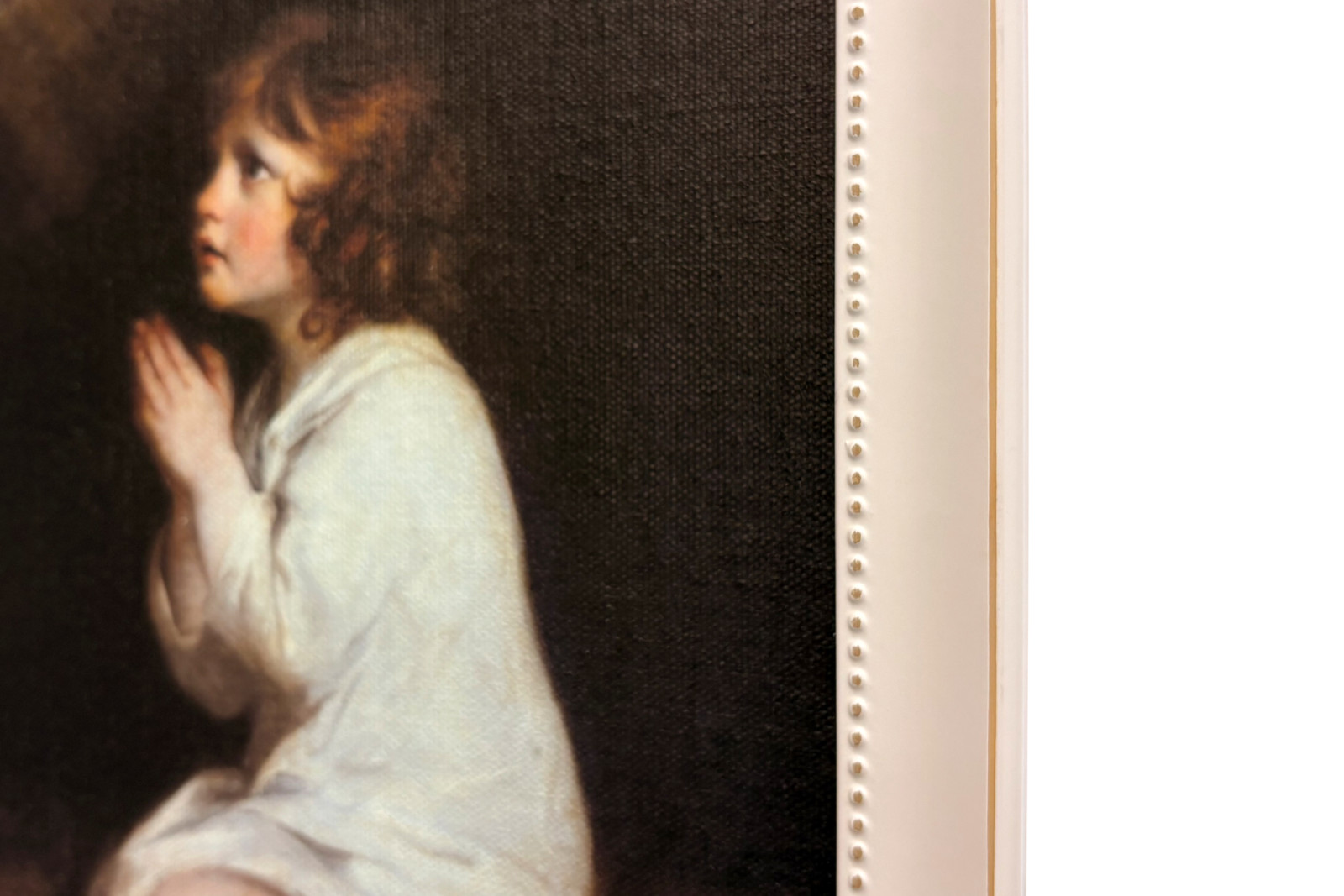
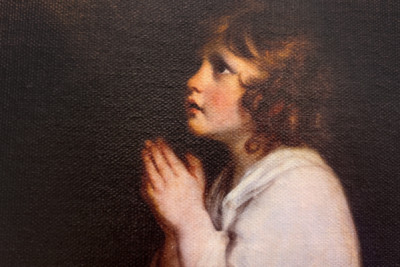
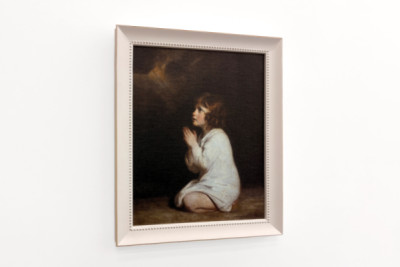
A child kneels on the bare floor, hands clasped in front of his chest, and looks up towards a glimmer of light breaking through the darkness in the top left-hand corner - that is all Joshua Reynolds needs to recount the calling of the young Samuel, who hears a voice at night in the temple at Shiloh and does not yet know who is calling him. The long white shirt, the reddish curls, the flushed cheeks and the half-open mouth are the only features that stand out against the brownish-black background, and it is precisely this restraint that sets the scene against a backdrop of childlike vulnerability and an event that is greater than the small body. Reynolds, who had been the first President of the Royal Academy since 1768, painted this subject several times in 1777; this version now hangs in the Musée Fabre in Montpellier. It is devotion without pathos.
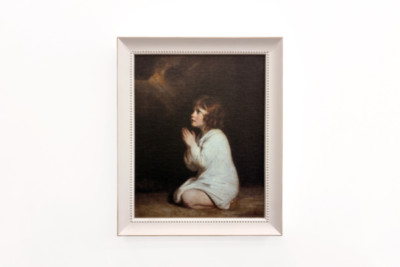
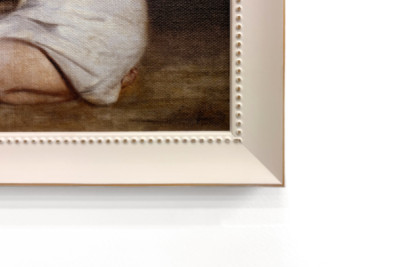
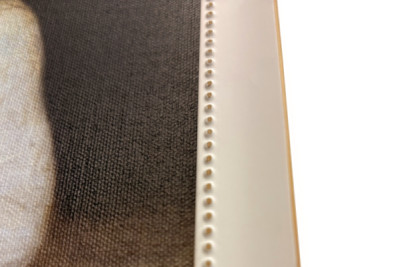
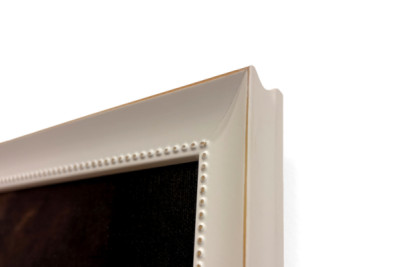
Measuring 20 x 25 cm, it becomes a small object that, against the white wall, almost resembles a piece from a domestic devotional setting. The Tara decorative frame has a wide profile in relation to the picture, so that in terms of surface area it is almost on a par with the subject - yet it hardly stands out at all, because its off-white tone matches that of Samuel’s shirt. At the bottom edge of the picture, the linen of the shirt meets the beaded border, and both remain within the same colour family; I lingered longer at this point than I did on the boy’s face. The beaded edge runs as a row of small hemispheres around the inside of the picture, whilst on the outside a wafer-thin golden strip frames the profile; together, they bring just enough light into the real wood to make it stand out from the wall without intruding on the darkness of the painting. From a distance of two metres, the whole thing appears as an island of light against the white; it is only up close that the boy comes into view. Anyone looking for a large, striking painting has come to the wrong place - for everyone else, it is well worth the effort.
It is surprising that such a small format does not swallow up the darkness but rather draws it in - and this is fitting for a painter who was at the height of his fame in 1777 and yet, in this work, prefers to speak softly rather than grandly.
 ×
×






 +43 4257 29415
 support@meisterdrucke.com
 Mo-Do: 7:00 - 16:00 | Fr: 7:00 - 13:00