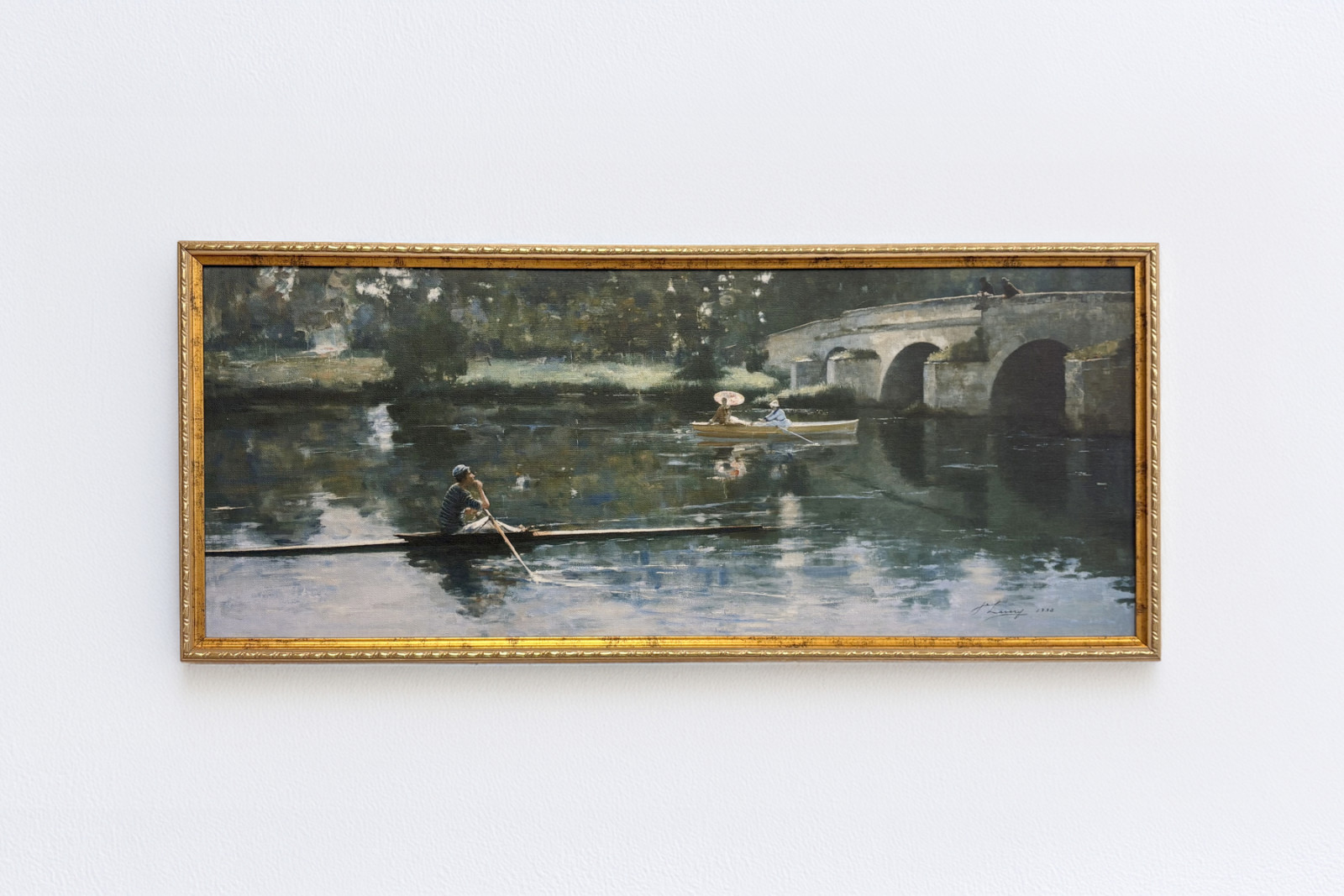
A rower glides in a long boat from the left-hand edge of the picture towards the stone bridge. Further back, a couple sits in a second boat. A bright parasol provides the smallest yet most striking splash of colour. On the right, two bridge arches rise out of the dark water. Their reflections extend the masonry downwards. On the opposite bank stands a dense row of trees. Light breaks through between the trunks. However, it reaches the water only in scattered patches. Blue, green and grey dominate the scene. Light pink and muted white enliven the centre. The wide landscape format follows the course of the river and leaves plenty of space between the boats. This creates a sense of movement without haste. Everything seems to be suspended in time for a moment. John Lavery painted the scene in 1883. The Irish artist is associated with late 19th-century painting. Here, he does not link the landscape and figures with sharp outlines. Short strokes and open areas of colour suffice. On the water in particular, objects almost dissolve into reflections. Only the bridge provides a solid counterpoint. Lavery’s signature and the date appear in the bottom right-hand corner. These, too, are kept small. The painting requires no grand gesture. Its tension lies between the tranquil river and the people crossing it.
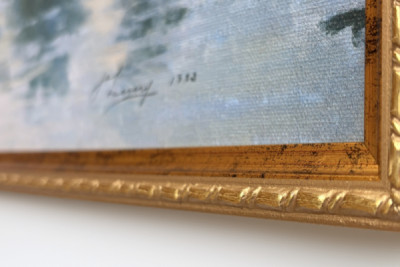
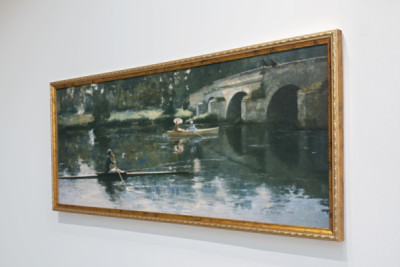
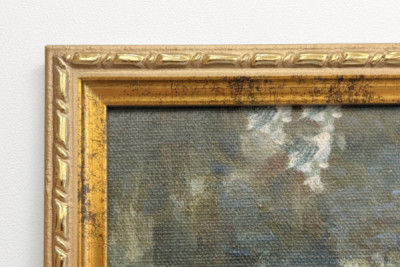
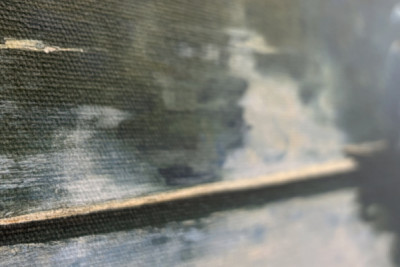
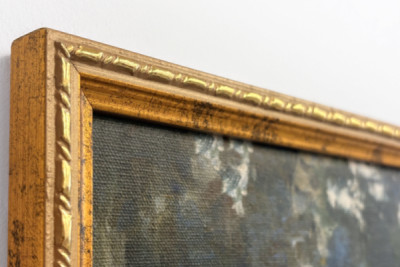
This version spreads the river landscape across 69 x 28 centimetres. ‘Leonardo’, the satin-finished canvas, displays the motif without glass or a passe-partout - so the light falls directly onto the surface. Viewed from the front, the sheen appears subdued, whilst the dark clusters of trees remain clearly discernible. Step to the side, and the effect changes noticeably: a bright reflection sweeps across the central boat, briefly blurring its figures in a soft glow. Over the light-coloured sections of water, this reflection expands into a broader area; over the dark zones, it remains narrower and cooler. This complements the painted reflection remarkably well, even though strong side lighting occasionally obscures individual contours. Noemi frames the canvas with a narrow gold strip; small raised areas catch spotlights, whilst the patinated recesses remain dark. Near the lower right-hand corner, Lavery’s signature lies beneath a gentle shimmer on the surface - a detail on which the eye is drawn to linger briefly. As the viewer tilts their head further to the side, the bright glow travels from the signature across the blue-grey water and ends at the inner gold edge.
 ×
×






 +43 4257 29415
 support@meisterdrucke.com
 Mo-Do: 7:00 - 16:00 | Fr: 7:00 - 13:00