-
 ×
×
- Home
- Art Prints ▸
- Artists ▸
- Categories ▸
- Art Styles ▸
-
Picture Frame ▸
- All decorative frames
- Baroque decorative frames
- Simple decorative frames
- Rustic decorative frames
- Floating frames
- Golden decorative frames
- Silver decorative frames
- White decorative frames
- Black decorative frames
- Wood-look decorative frames
- Shabby chic decorative frames
- Thin decorative frames
- Thick decorative frames
-
Print Media ▸
- All print media
- Canvas Leonardo (satin)
- Canvas Salvador (matte)
- Canvas Raphael (matte)
- FineArt Photo Matte
- FineArt Photo Satin
- FineArt Photo Baryte
- FineArt Photo Glossy
- Watercolor Paper Munch
- Watercolor Paper Renoir
- Watercolor Paper Turner
- Watercolor Paper Dürer
- Natural Line Hemp
- Natural Line Rice
- Kozo White, 110g
- Kozo Natural, 110g
- Inbe White, 125g
- Unryu, 55g
- Bamboo, 110g
- Premio Unryu, 165g
- Murakumo Natural, 42g
- Bizan Natural, 300g
- Bizan White, 300g
- Aluminum composite 3mm
- Acrylic glass 5mm
- Order Sample Set
- Which print medium is right for you?
Canvas
Photo Paper
Watercolor Board
Natural Line
Japanese Paper
Special Media
More information
-
Help & Service ▸
- Contact us
- Sell your art
- Frequently Asked Questions
- Job Openings
- Complaint
- Order Samples
- Order Vouchers
- Shipping costs
- Production time
- Sustainability
- Image research
- Special requests
- Who are we?
- Pricing policy
- Company policy
- Quality promise
- Stretcher frame
- Mats
- Decorative frames
- Glazing
- Fillets
- Mounting systems
- Print media
- Care tips
- Legal Notice
- Terms & Conditions
- Privacy Policy
- Right of Cancellation
Info & Service
More information
Good to know
Legal information
- Shop ▸
- Contact





 View in 3D / AR
 Add to favorites
 Change wall color
 View picture in a room
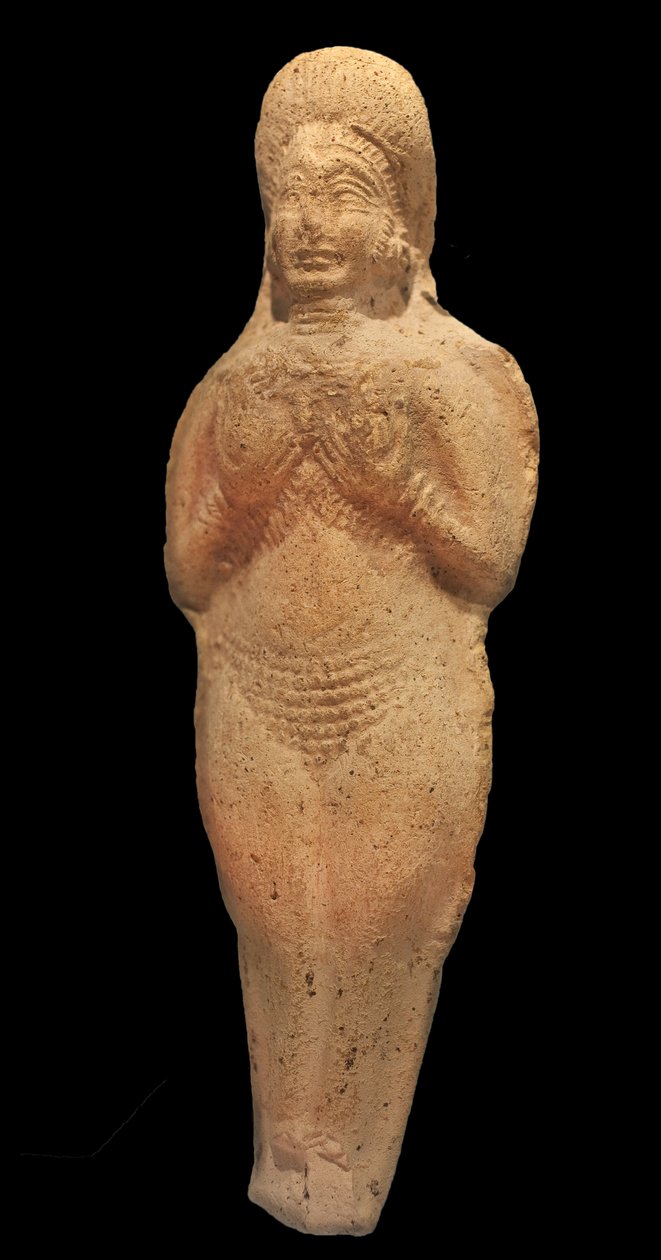
.jpg "Female figurine. Terracotta sculpture. Neo-Sumerian period (between 2093 and 2004 BC). Baghdad, National Iraq Museum")
 - (MeisterDrucke-262379).jpg "Statue of a Goddess, 6th Millennium BC")
.jpg "Female Idol, Schematic Figurine with Ochre Inlays")
.jpg "Female Figurine, from El Mamariya")
.jpg "Steatopygous Female Idol (early 1st millennium BC)")
_-_(MeisterDrucke-1586969).jpg "Headless Female Figurine, 3400-3000 BC")
.jpg "Sumerian art: warrior god with the ears of cattle in his coffin, probably the Mesopotamian god Dumuzi")
_-_(MeisterDrucke-1628289).jpg "Pre-Columbian Statuette / Chorrera Art")
.jpg "Prehistory: Clay Statuette of a Woman with Square Shoulders from Central Turkmenistan. 4000-3700 BC. Eneolithic, Copper Age. Moscow, Institute of Archaeology of the Russian Academy of Sciences")
 - (MeisterDrucke-207758).jpg "Statuette of a Woman, Early 4th Millennium BC")
.jpg "Figurine of a Seated Woman")
_culture_(terracotta)_-_(MeisterDrucke-1635005).jpg "Female Figurine")
 - (MeisterDrucke-233512).jpg "Cycladic Figure, Spedos")
 - (MeisterDrucke-228481).jpg "Cycladic Figurine, Naxos")
.jpg "Double axehead and two figurines from Knossos, late Minoan, c.1500 BC")
_-_(MeisterDrucke-931140).jpg "Female figure, Middle Elamite, c.1500-1100 BC (ceramic)")
_in_Thessaly_Gre_-_(MeisterDrucke-997162).jpg "Neolithic Steopagus Lady, front and side view, Avaritsa (Meliteia) in Thessaly, Greece, 6000-5200 BC")
_-_(MeisterDrucke-989209).jpg "Painted clay figurine of a female, Syria, c.5000 BC")
.jpg "At the College of Eastern Utah Prehistoric Museum in Price, Utah the Fremont era Pilling Figurines, found near Range Creek by Clarence Pilling in 1950.")
.jpg "Prehistoric Art: The Venus of Willendorf - Limestone statuette representing a woman with highly developed forms, 23000 BC (Upper Paleolithic), dimensions: 11 cm - Vienna, Natural History Museum - Prehistory: Venus of Willendorf - Oolitic limestone")
_-_(MeisterDrucke-959376).jpg "Statuette of a Lion-Headed Demon, Mesopotamia")
_-_(MeisterDrucke-430723).jpg "Steatopygous figure, Amlash, late 2nd-early 1st millennium BC")
 - (MeisterDrucke-161216).jpg "Cycladic Figurine, Naxos")
 - (MeisterDrucke-170112).jpg "Cycladic Figurine, Naxos")
.jpg "Steatopygous female idol, c. early 1st millennium BC")
.jpg "Terracotta dogu sculpture from Akita, Jomon period")
.jpg "Art of the Cyclades: “Female Figurine”, marble idol from Syros. 3000 BC. Cycladic Civilization (-3200 to -2000). Dimensions: 46 cm. Athens, National Archaeological Museum")
.jpg "Male Idol, Schematic Figurine with Ochre Inlays")
.jpg "Standing female figure wearing a strap and a necklace, 3rd-2nd millennium BC")
 (see also 257 - (MeisterDrucke-258010).jpg "Cycladic Figure, Early Spedos, c.2700 BC")
 - (MeisterDrucke-230064).jpg "Lion from the Ishtar Gate, Babylon (glazed bricks)")
.jpg "A bull, detail from glazed brick tiles depicting mythological animals that adorned the Processional Way to the Ishtar Gate in Babylon during the reign of Nebuchadnezzar II (604-562 BC). Babylonian civilization, 7th-6th century BC.")
.jpg "The Processional Way of Babylon, erected under the rule of Nebuchadnezzar II (605-562 BC): detail of the Ishtar Gate depicting a mosaic lion made of bricks. Babylon, Iraq. Paris, Louvre Museum")
 - (MeisterDrucke-321790).jpg "Bull, from Babylon")
_in_black_limeston_-_(MeisterDrucke-1063144).jpg "Oriental antiquity: stele (or kudurru, record of a land grant) in black limestone carved with bas-reliefs of King Meli-Shipak (or Melishipak) II (1186-1172 BC) in favor of his son Marduk-apla-iddina. They represent the great deities. From the site of Su")
.jpg "Votive tablet depicting Shamash, the sun god of Sippar, seated in his shrine, with the Babylonian king Nebopaliddin led into the god")
.jpg "The Processional Way of Babylon erected under the rule of Nebuchadnezzar II (605-562 BC): detail of the Ishtar Gate depicting a mosaic lion of bricks. Babylon, Iraq. Paris. Louvre Museum")
.jpg "Clay Brick Inscribed with the Name of King Nebuchadnezzar II, King of Babylon, c. 604-561 BC")
.jpg "Astronomical tablet from Kish, recording the rising and settings of Venus from the first 6 years of the reign of the King of Babylon, 7th century")
.jpg "Detail of a bull, relief of the Ishtar gate, 580 BC")
 - (MeisterDrucke-144795).jpg "Plaque depicting a bust of the goddess Ishtah, 18th century BC")
.jpg "Lion representing Ishtar, from Babylon, 625-539 BC")
 - (MeisterDrucke-283163).jpg "Clay tablet with cuneiform script on both sides")
 - (MeisterDrucke-234395).jpg "Tablet with cuneiform script, c. 1830-1530 BC")
.jpg "Cylinder seal and impression, possibly Babylonian, c. 18th century BC")
.jpg "Sunset over Yalta")
.jpg "Asakusa Rice Fields During the Festival of the Cock, c.1857")
.jpg "Harbour of Trieste")
.jpg "Moonrise over the Sea")
.jpg "Sheerness as seen from the Nore")
.jpg "The Kiss, 1895")
.jpg "Small garden ghost")
.jpg "The Entrance to the Grand Canal, Venice, ca 1730")
_picking_flowers_fresco_from_the_villa_of_Varano_-_(MeisterDrucke-1021520).jpg "Roman art: “Spring”, Flora picking flowers. Fresco from the Villa of Varano in Stabiae, near Pompeii. 15 BC-60 AD. National Archaeological Museum, Naples")
.jpg "Untitled No. 1 from a Series of Altar Paintings, 1915")
.jpg "Birds and Flowers of Spring and Summer")
.jpg "Church in Cassone")
.jpg "Cliff Walk at Pourville, 1882")
.jpg "Water Serpents II")
_-_Le_Destin_des_empires_-_Destruction_-_par_Thomas_Cole_-_1836_-_(MeisterDrucke-1051290).jpg "Sack of Rome (455) - The Course of Empire - Destruction - 1836 - New York Historical Society - (Rome, Roman Empire, Gaiseric, Genseric, Migration Period, Barbarian Invasions, Vandals, Fall of Western Roman Empire, Fall of Rome, Sack of Rome)")

 +43 4257 29415
 support@meisterdrucke.com
 Mo-Do: 7:00 - 16:00 | Fr: 7:00 - 13:00