Godfrey Kneller was born as Gottfried Kniller, the third son of the painter Zacharias Kniller. The family was wealthy and respected. His father had been in the service of the Swedish king for a long time and had then been appointed to the position of Chief Surveyor in Lübeck. Although his father planned a career in the military for him and therefore sent him to study at the University of Leiden, the young Gottfried's artistic interests prevailed. He moved to Amsterdam, where he was taught by Ferdinand Bol in the style of Rembrandt and also undertook trips to Rome and Venice for study purposes.
From 1666 he worked as an independent painter and moved from Hamburg to England in 1676, where he took his English name. From the year 1700 Kneller counts among the most influential portrait painters. His outstanding ability to produce expressive character studies made him one of the most successful English painters of his time. The entire English, French and German nobility had their portraits painted by him. From 1680 he became the official portraitist of the British king and in 1692 he was elevated to knighthood by the king.
Among his most famous works are the 42 portraits of the members of the important "Kit-Kat-Club" of the English Whigs, which included John Locke. These portraits also gave rise to the term "Kit-Kat-Format" for portraits of a certain, shortened format of about 91 x 71 centimetres, on which at least one hand of the person depicted is always visible.
 ×
×







 Passionate Customer Service

 1st Duke of Marlborough - (MeisterDrucke-52771).jpg "Portrait of John Churchill (1650-1722), 1st Duke of Marlborough by Godfrey Kneller")
 1st Duke of Marlborough - (MeisterDrucke-52771).jpg)
 1702 - (MeisterDrucke-273368).jpg "Portrait of Isaac Newton (1642-1727), 1702 by Godfrey Kneller")
 1702 - (MeisterDrucke-273368).jpg)
.jpg "Sir Isaac Newton by Godfrey Kneller")
.jpg)
 1711 - (MeisterDrucke-107544).jpg "Portrait of Sir Christopher Wren (1632-1723), 1711 by Godfrey Kneller")
 1711 - (MeisterDrucke-107544).jpg)
_in_his_coronation_robes_1727_-_(MeisterDrucke-255577).jpg "Portrait of Henry, 1st Viscount St. John (1652-1742) in his coronation robes, 1727 by Godfrey Kneller")
_in_his_coronation_robes_1727_-_(MeisterDrucke-255577).jpg)
 second wife of 1 - (MeisterDrucke-284624).jpg "Portrait of Angelina Magdalena (c.1666-1736), second wife of 1st Viscount St. John in coronation robes, 1727 by Godfrey Kneller")
 second wife of 1 - (MeisterDrucke-284624).jpg)
_-_(MeisterDrucke-312970).jpg "Sarah, Duchess of Marlborough and Lady Fitzharding, pub. 1902 by Godfrey Kneller")
_-_(MeisterDrucke-312970).jpg)
.jpg "Portrait of Peter the Great (Peter I of Russia) by Godfrey Kneller")
.jpg)
 Austrian military commander in Spain during the War of The Spanish Succession - (MeisterDrucke-76815).jpg "Field Marshall Count Guidobald von Starhemberg (1654-1737), Austrian military commander in Spain during the War of The Spanish Succession by Godfrey Kneller")
 Austrian military commander in Spain during the War of The Spanish Succession - (MeisterDrucke-76815).jpg)
.jpg "Queen Anne and William, Duke of Gloucester by Godfrey Kneller")
.jpg)
.jpg "Portrait of King George I by Godfrey Kneller")
.jpg)
 of Orange (see also 194651) - (MeisterDrucke-197335).jpg "Portrait of William III of Orange by Godfrey Kneller")
 of Orange (see also 194651) - (MeisterDrucke-197335).jpg)
.jpg "Portrait of Bishop Trelawny, one of the Seven Bishops who petitioned against James II")
.jpg)
 - (MeisterDrucke-145949).jpg "Portrait of Thomas Osborne, 1st Duke of Leeds by Godfrey Kneller")
 - (MeisterDrucke-145949).jpg)
_1690_8Gkilled_at_the_Battle_of_Steenkirk_in_1692_-_(MeisterDrucke-199490).jpg "General Hugh Mackay, killed at the Battle of Steenkirk in 1692 during the Nine Years")
_1690_8Gkilled_at_the_Battle_of_Steenkirk_in_1692_-_(MeisterDrucke-199490).jpg)
 second wife of 1 - (MeisterDrucke-278028).jpg "Portrait of Angelina Magdalena, second wife of 1st Viscount St. John by Godfrey Kneller")
 second wife of 1 - (MeisterDrucke-278028).jpg)
.jpg "Robert Harley, 1st Earl of Oxford by Godfrey Kneller")
.jpg)
 - (MeisterDrucke-65574).jpg "Portrait of King William III (1650-1702) by Godfrey Kneller")
 - (MeisterDrucke-65574).jpg)
 - (MeisterDrucke-70244).jpg "The Lord Churchill")
 - (MeisterDrucke-70244).jpg)
 1711 - (MeisterDrucke-67241).jpg "Portrait of Sir Richard Steele (1711) by Godfrey Kneller")
 1711 - (MeisterDrucke-67241).jpg)
_from_Illustrations_of_English_and_Scottish_History_Volum_-_(MeisterDrucke-100547).jpg "Queen Mary II from")
_from_Illustrations_of_English_and_Scottish_History_Volum_-_(MeisterDrucke-100547).jpg)
.jpg "Joseph Harwar, President of Magdalen College by Godfrey Kneller")
.jpg)
_-_(MeisterDrucke-1645618).jpg "Portrait of Grace Strode, later the Hon. Mrs. Henry Thynne by Godfrey Kneller")
_-_(MeisterDrucke-1645618).jpg)
.jpg "John Locke, English philosopher, short story writer, editor and critic, c. 1680-1704 by Godfrey Kneller")
.jpg)
.jpg "Portrait of Algernon Seymour, Earl of Hertford, later 7th Duke of Somerset, when a boy, aged about 4 by Godfrey Kneller")
.jpg)
 engraved by George Vertue (1684-1756) 1702 - (MeisterDrucke-194685).jpg "Queen Anne (1665-1714), engraved by George Vertue, 1702 by Godfrey Kneller")
 engraved by George Vertue (1684-1756) 1702 - (MeisterDrucke-194685).jpg)
 engraved by John Faber (1684-17 - (MeisterDrucke-292369).jpg "William Congreve, engraved by John Faber, 1733 by Godfrey Kneller")
 engraved by John Faber (1684-17 - (MeisterDrucke-292369).jpg)
_English_mathematician_physicist_and_astrono_-_(MeisterDrucke-1103903).jpg "Portrait of Isaac Newton (1642-1727), English mathematician, physicist and astronomer, Painting by Godfrey Kneller (1646-1723) by Godfrey Kneller")
_English_mathematician_physicist_and_astrono_-_(MeisterDrucke-1103903).jpg)
_from_Illustrations_of_English_and_Scottish_History_Volum_-_(MeisterDrucke-109258).jpg "William III (1650-1702) from")
_from_Illustrations_of_English_and_Scottish_History_Volum_-_(MeisterDrucke-109258).jpg)
.jpg "John Churchill, 1st Duke of Marlborough by Godfrey Kneller")
.jpg)
_-_(MeisterDrucke-1502491).jpg "Samuel Pepys (1633-1703) by Godfrey Kneller")
_-_(MeisterDrucke-1502491).jpg)
.jpg "Portrait of William, Lord Digby, 1715 by Godfrey Kneller")
.jpg)
.jpg "Sir Isaac Newton 1642-1723, detail of 159042 by Godfrey Kneller")
.jpg)
 engraved by Simon - (MeisterDrucke-272560).jpg "James Butler, 1st Duke of Ormonde (1610-88), engraved by Simon Francois Ravenet (1706-74) by Godfrey Kneller")
 engraved by Simon - (MeisterDrucke-272560).jpg)
.jpg "The Ladies Churchill, 18th Century by Godfrey Kneller")
.jpg)
_-_(MeisterDrucke-1553956).jpg "King James II (1633–1701) by Godfrey Kneller")
_-_(MeisterDrucke-1553956).jpg)
_late_17th_to_early_18th_century_(oil_painti_-_(MeisterDrucke-1500145).jpg "Admiral George Churchill, late 17th to early 18th century by Godfrey Kneller")
_late_17th_to_early_18th_century_(oil_painti_-_(MeisterDrucke-1500145).jpg)
.jpg "Henry, 3rd Lord Arundell of Wardour, Holding a Baton as Master of the Horse by Godfrey Kneller")
.jpg)
.jpg "William III on a Grey Charger Observed by Neptune, Ceres and Flora. Mercury in the Sky and Astrea by Godfrey Kneller")
.jpg)
.jpg "Bridget Sutton, 3rd Duchess of Rutland by Godfrey Kneller")
.jpg)
_-_(MeisterDrucke-312677).jpg "William, Duke of Gloucester, pub. 1902 by Godfrey Kneller")
_-_(MeisterDrucke-312677).jpg)
.jpg "Portrait of a Woman as St. Agnes, traditionally identified as Catherine Voss by Godfrey Kneller")
.jpg)
_Countess_of_Warwick_c1690-1723_(oil_-_(MeisterDrucke-1376664).jpg "Portrait of Charlotte Myddleton, Countess of Warwick by Godfrey Kneller")
_Countess_of_Warwick_c1690-1723_(oil_-_(MeisterDrucke-1376664).jpg)
_-_(MeisterDrucke-1457541).jpg "Catherine Sedley, Countess of Dorchester by Godfrey Kneller")
_-_(MeisterDrucke-1457541).jpg)
_-_(MeisterDrucke-311086).jpg "Francis Godolphin, Earl of Godolphin by Godfrey Kneller")
_-_(MeisterDrucke-311086).jpg)
_-_(MeisterDrucke-238300).jpg "Charles Montagu, Earl of Halifax by Godfrey Kneller")
_-_(MeisterDrucke-238300).jpg)
.jpg "Catharine Littleton, wife of John Floyer by Godfrey Kneller")
.jpg)
 - (MeisterDrucke-160292).jpg "Sir Samuel Garth by Godfrey Kneller")
 - (MeisterDrucke-160292).jpg)
.jpg "Face of a man, three-quarters, looking directly at viewer, possibly a self-portrait by Godfrey Kneller")
.jpg)
.jpg "Portrait of Elizabeth Skipwith, Lady Craven, three-quarter-length, in a blue dress and red shawl, a wooded river landscape beyond, 1704 by Godfrey Kneller")
.jpg)
 (see also 194650) - (MeisterDrucke-164644).jpg "Portrait of Queen Mary by Godfrey Kneller")
 (see also 194650) - (MeisterDrucke-164644).jpg)
_-_(MeisterDrucke-37103).jpg "Sir John Vanbrugh (engraving) by Godfrey Kneller")
_-_(MeisterDrucke-37103).jpg)
.jpg "Portrait of William Cavendish, 4th Earl and 1st Duke of Devonshire, c.1690-1710 by Godfrey Kneller")
.jpg)
.jpg "Henry Sacheverell D.D. and Francis Atterbury, Bishop of Rochester by Godfrey Kneller")
.jpg)
 1st Earl of Godolphin engraved and published by John Smith (1652-1743) 1707 (mezzotint) - (MeisterDrucke-104140).jpg "Portrait of Sidney Godolphin, 1st Earl of Godolphin, engraved and published by John Smith by Godfrey Kneller")
 1st Earl of Godolphin engraved and published by John Smith (1652-1743) 1707 (mezzotint) - (MeisterDrucke-104140).jpg)
_-_(MeisterDrucke-1498808).jpg "William III, Late 17th Century by Godfrey Kneller")
_-_(MeisterDrucke-1498808).jpg)
.jpg "Mary II, 1691 by Godfrey Kneller")
.jpg)
 - (MeisterDrucke-248712).jpg "Portrait of James VII of Scotland, II of England (1633-1701) engraved by George Vertue by Godfrey Kneller")
 - (MeisterDrucke-248712).jpg)
 Secretary to the Admiralty - (MeisterDrucke-204611).jpg "Samuel Pepys, Secretary to the Admiralty by Godfrey Kneller")
 Secretary to the Admiralty - (MeisterDrucke-204611).jpg)
.jpg "Laurence Hyde, 1st Earl of Rochester, engraved by John Goldar, 1785 by Godfrey Kneller")
.jpg)
.jpg "Lady Henrietta Crofts, Duchess of Bolton by Godfrey Kneller")
.jpg)
.jpg "Portrait of King George II When Prince of Wales, Full Length, Wearing State Robes and the Collar of the Order of the Garter, Holding His Sword in His Left Hand, and His Coronet on a Table Beside Him, in an Interior by Godfrey Kneller")
.jpg)
.jpg "Laurence Hyde, Earl of Rochester by Godfrey Kneller")
.jpg)
.jpg "Edward Strong, c.1710 by Godfrey Kneller")
.jpg)
_engraved_by_Jacob_Houbraken_(1_-_(MeisterDrucke-104106).jpg "Portrait of Thomas Marquis of Wharton, engraved by Jacob Houbraken, published by P. Knanton, 1744 by Godfrey Kneller")
_engraved_by_Jacob_Houbraken_(1_-_(MeisterDrucke-104106).jpg)
.jpg "Portrait of the Ambassador Pyotr Ivanovich Potyomkin, 1682 by Godfrey Kneller")
.jpg)
.jpg "Lucretia by Godfrey Kneller")
.jpg)
 - (MeisterDrucke-114509).jpg "Samuel Pepys (1633-1703) by Godfrey Kneller")
 - (MeisterDrucke-114509).jpg)
 engraved by James Posselwhite (1798-1884) pub by William Mackenzie - (MeisterDrucke-208112).jpg "Portrait of John Locke engraved by James Posselwhite by Godfrey Kneller")
 engraved by James Posselwhite (1798-1884) pub by William Mackenzie - (MeisterDrucke-208112).jpg)
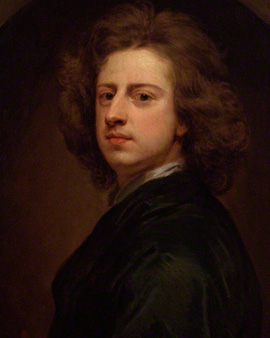
.jpg "Self-Portrait by Godfrey Kneller")
.jpg)
.jpg "Portrait of Richard Boyle, 3rd Earl of Burlington, with His Three Sisters, Elizabeth, Juliana and Jane Boyle by Godfrey Kneller")
.jpg)
 of Orange - (MeisterDrucke-150505).jpg "Portrait of William III of Orange by Godfrey Kneller")
 of Orange - (MeisterDrucke-150505).jpg)
 copied by Edmund Dyer - (MeisterDrucke-214998).jpg "Sir Christopher Wren (1632-1723) copied by Edmund Dyer by Godfrey Kneller")
 copied by Edmund Dyer - (MeisterDrucke-214998).jpg)
_-_(MeisterDrucke-1081199).jpg "Portrait of George I, King of Great Britain (1660-1727) by Godfrey Kneller")
_-_(MeisterDrucke-1081199).jpg)
.jpg "Frederick Duke of Schonberg, Marquis of Harwich, Earl of Bransford by Godfrey Kneller")
.jpg)
.jpg "Portrait of Charles Seymour, 6th Duke of Somerset by Godfrey Kneller")
.jpg)
.jpg "Charles, 2nd Viscount Townshend by Godfrey Kneller")
.jpg)
_in_the_robes_of_the_Order_-_(MeisterDrucke-1028672).jpg "Portrait of Charles II of England in the Robes of the Order of the Garter by Godfrey Kneller")
_in_the_robes_of_the_Order_-_(MeisterDrucke-1028672).jpg)
.jpg "Roger Palmer, illustration from")
.jpg)
.jpg "Three-quarter Portrait of a Commander in Armour with a Staff in His Right Hand. In the Background a Landscape with a Town by Godfrey Kneller")
.jpg)
.jpg "Joseph Addison by Godfrey Kneller")
.jpg)
_-_(MeisterDrucke-1527990).jpg "William Congreve, Portrait 1709 by Godfrey Kneller")
_-_(MeisterDrucke-1527990).jpg)
 - (MeisterDrucke-303525).jpg "John, Baron Somers, P.R.S. by Godfrey Kneller")
 - (MeisterDrucke-303525).jpg)
_-_(MeisterDrucke-974576).jpg "John Scrope, Recorder of Bristol by Godfrey Kneller")
_-_(MeisterDrucke-974576).jpg)
_actor_painting_by_Godfrey_Kneller_(1646_-_(MeisterDrucke-1120109).jpg "Portrait of Thomas Betterton by Godfrey Kneller")
_actor_painting_by_Godfrey_Kneller_(1646_-_(MeisterDrucke-1120109).jpg)
.jpg "Charles Beauclerk, Duke of St. Albans by Godfrey Kneller")
.jpg)
_-_(MeisterDrucke-1376402).jpg "Portrait of Lady Robert Russell by Godfrey Kneller")
_-_(MeisterDrucke-1376402).jpg)
 Duke of Lauzun after a painting by Peter Lely (1618-80) - (MeisterDrucke-114402).jpg "Antoine-Nomper de Caumont (1633-1723) Duke of Lauzun, after a painting by Peter Lely by Godfrey Kneller")
 Duke of Lauzun after a painting by Peter Lely (1618-80) - (MeisterDrucke-114402).jpg)
_1696_(mezzotint)_-_(MeisterDrucke-275310).jpg "Henricus Aldrich, engraved by John Smith, 1696 by Godfrey Kneller")
_1696_(mezzotint)_-_(MeisterDrucke-275310).jpg)
_-_(MeisterDrucke-1376609).jpg "Portrait of a Lady by Godfrey Kneller")
_-_(MeisterDrucke-1376609).jpg)
.jpg "James Douglas, 2nd Duke of Queensberry, engraved by Louis du Guernier II by Godfrey Kneller")
.jpg)
.jpg "Francis Atterbury, Bishop of Rochester by Godfrey Kneller")
.jpg)
.jpg "George I by Godfrey Kneller")
.jpg)
.jpg "James Butler, 2nd Duke of Ormond, engraved by Henry Robinson by Godfrey Kneller")
.jpg)
.jpg "Joseph Addison, 1748 by Godfrey Kneller")
.jpg)
 - (MeisterDrucke-115758).jpg "Spencer Compton, Earl of Wilmington, Print by John Faber by Godfrey Kneller")
 - (MeisterDrucke-115758).jpg)
_-_(MeisterDrucke-1084384).jpg "Portrait of Charles Calvert by Godfrey Kneller")
_-_(MeisterDrucke-1084384).jpg)
.jpg "Sir Isaac Newton by Godfrey Kneller")
.jpg)
.jpg "The Female Form with Astrological Symbols, Illustration from")
.jpg)
_KnellerResidenzmuseum_Celle20160708_-_(MeisterDrucke-1574823).jpg "William III (Orange) by Godfrey Kneller")
_KnellerResidenzmuseum_Celle20160708_-_(MeisterDrucke-1574823).jpg)

 +43 4257 29415
 support@meisterdrucke.com
 Mo-Do: 7:00 - 16:00 | Fr: 7:00 - 13:00