Wrapped in the garb of the Baroque, Giuseppe Maria Crespi began his artistic journey as a traditional painter of Italy. But like a butterfly emerging from its cocoon, Crespi broke out of the shackles of academic tradition and developed a style that was far ahead of its time. With artists such as Giambattista Pittoni, Giovanni Battista Tiepolo, Giovanni Battista Piazzetta, Canaletto and Francesco Guardi, he shared the honor of being counted among the Old Masters of his era. Crespi, also known as "Lo Spagnuolo" because of his Spanish fashion style, stood out for his versatility - he created both religious subjects and portraits, but today he is most famous for his genre paintings.
Born in Bologna, Crespi became one of the figureheads of the Bolognese school. He entered Angelo Michele Toni's apprenticeship at the age of 12 and completed his training at Domenico Maria Canuti and later at Carlo Cignani's studio. After Cignani's departure from Bologna, Crespi found his independence and began to run his own studio. Although his early works were strongly influenced by the High Baroque classicism of his teachers, he revolutionized his art by traveling to Venice and other northern Italian cities. Here he took a liking to the flowing style of the early Baroque and developed his own interpretation of this art movement. However, he showed little interest in the Roman art scene and even declined an invitation from the Roman painter Carlo Maratta to visit him in Rome.
Among Crespi's most famous works, the painting "The Flea Seekers" stands out, a typical representation of his genre, capturing the simple and poor people in their everyday life. Despite his unconventionality and capriciousness, which brought him criticism from artists such as the Italian-based German painter Anton Raphael Mengs, Crespi was a sought-after teacher. His studio attracted artists such as Antonio Gionima and Giovanni Battista Tiepolo0, and he was a major influence on the Venetians Giovanni Battista Piazzetta and Giovanni Battista Tiepolo2.
After the death of his wife, Crespi withdrew from the public eye and spent his days in silent prayer before dying at the age of 82. But although the artist has passed, his works live on and are available today as fine art prints, reproduced with the highest quality and care to do justice to Crespi's legacy. Through these art prints we contribute to preserve the artistic legacy of this extraordinary artist and keep the spirit of his art alive in today's world.
 ×
× 






 Passionate Customer Service

.jpg "Cupid and Psyche by Giuseppe Maria Crespi")
.jpg)
.jpg "The Centaur Chiron and Achilles by Giuseppe Maria Crespi")
.jpg)
.jpg "Madonna and Child by Giuseppe Maria Crespi")
.jpg)
_-_(MeisterDrucke-1729986).jpg "The Birth of Arcas or the Birth of Adonis (?) by Giuseppe Maria Crespi")
_-_(MeisterDrucke-1729986).jpg)
_Crespi_-_La_mort_de_saint_Joseph_(Death_of_Saint_Joseph)_Vieillard_allonge_sur_son_lit_de_-_(MeisterDrucke-1318209).jpg "The Death of Saint Joseph. An Old Man Lying on His Deathbed, Surrounded by the Virgin Mary, Jesus Christ Blessing Him and Angels. Painting by Giuseppe Maria Crespi, Known as Lo Spagnolo (1665-1747), Oil on Canvas, c. 1712. Italian Art by Giuseppe Maria Crespi")
_Crespi_-_La_mort_de_saint_Joseph_(Death_of_Saint_Joseph)_Vieillard_allonge_sur_son_lit_de_-_(MeisterDrucke-1318209).jpg)
.jpg "The Death of St. Joseph, c. 1712 by Giuseppe Maria Crespi")
.jpg)
_1700-171_-_(MeisterDrucke-947713).jpg "The Olympus Fresco by Giuseppe Maria Crespi, called lo Spagnolo (1665-1747), 1700-1710, Bologna, Palazzo Pepoli Campogrande by Giuseppe Maria Crespi")
_1700-171_-_(MeisterDrucke-947713).jpg)
.jpg "Aeneas, Sibyl and Charon, ca. 1695 by Giuseppe Maria Crespi")
.jpg)
.jpg "Trompe-l'œil of a Bookcase, 1710-20 by Giuseppe Maria Crespi")
.jpg)
.jpg "St John of Nepomuk hears confession from the Queen of Bohemia, 1729-41 by Giuseppe Maria Crespi")
.jpg)
.jpg "The Flea, c. 1715-20 by Giuseppe Maria Crespi")
.jpg)
.jpg "The Resurrection of Christ, c. 1690 by Giuseppe Maria Crespi")
.jpg)
.jpg "Tarquin and Lucretia, c. 1695-1700 by Giuseppe Maria Crespi")
.jpg)
.jpg "Psyche Discovers Cupid, 1707-09 by Giuseppe Maria Crespi")
.jpg)
.jpg "Still Life Library with Music Books. Painting by Giuseppe Maria Crespi, known as lo Spagnolo (the Spaniard) (1665-1747), 1715, Bologna, Conservatorio di musica by Giuseppe Maria Crespi")
.jpg)
.jpg "The fair in Poggio a Caiano in Tuscany, Italy by Giuseppe Maria Crespi")
.jpg)
_Crespi_-_Europa_and_the_Bull_(oil_on_canvas)_-_(MeisterDrucke-1129091).jpg "Europa and the Bull by Giuseppe Maria Crespi")
_Crespi_-_Europa_and_the_Bull_(oil_on_canvas)_-_(MeisterDrucke-1129091).jpg)
_Crespi_-_Femme_a_la_recherche_de_puces_(Woman_Looking_for_Fleas)_Peinture_de_Giuseppe_Mar_-_(MeisterDrucke-1320300).jpg "Woman Looking for Fleas. Around 1710. Italian art (Bologna) by Giuseppe Maria Crespi")
_Crespi_-_Femme_a_la_recherche_de_puces_(Woman_Looking_for_Fleas)_Peinture_de_Giuseppe_Mar_-_(MeisterDrucke-1320300).jpg)
.jpg "The Sacrifice of Abraham by Giuseppe Maria Crespi")
.jpg)
.jpg "Pope Benedict XIV by Giuseppe Maria Crespi")
.jpg)
_18th_century_Sun_054_x_-_(MeisterDrucke-1021786).jpg "The woman with the flea by Giuseppe Maria Crespi")
_18th_century_Sun_054_x_-_(MeisterDrucke-1021786).jpg)
.jpg "Blessed Bernard Tolomei Interceding for the Cessation of the Plague in Siena by Giuseppe Maria Crespi")
.jpg)
.jpg "Girl Holding a Dove by Giuseppe Maria Crespi")
.jpg)
_Crespi_-_The_Kitchen_Girl_Painting_by_Giuseppe_Maria_Crespi_said_lo_Spagnolo_(Spanish)_(1_-_(MeisterDrucke-983757).jpg "The Kitchen Girl, c. 1722. H. 57 x 43 cm, Florence, Galleria degli Uffizi (Uffizi) by Giuseppe Maria Crespi")
_Crespi_-_The_Kitchen_Girl_Painting_by_Giuseppe_Maria_Crespi_said_lo_Spagnolo_(Spanish)_(1_-_(MeisterDrucke-983757).jpg)
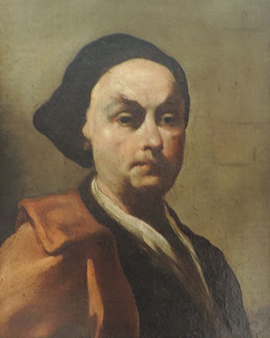
.jpg "Self-portrait, c1700 by Giuseppe Maria Crespi")
.jpg)
.jpg "Portrait of the Pope Benedict XIV by Giuseppe Maria Crespi")
.jpg)
.jpg "Girl Holding a Dove, 1721-27 by Giuseppe Maria Crespi")
.jpg)
.jpg "The Sacrifice of Abraham by Giuseppe Maria Crespi")
.jpg)
.jpg "Cupids Disarming Sleeping Nymphs by Giuseppe Maria Crespi")
.jpg)
.jpg "The Market, or The Fair of Poggio a Caiano by Giuseppe Maria Crespi")
.jpg)
.jpg "Young Peasant Seated on the Ground by Giuseppe Maria Crespi")
.jpg)
 - (MeisterDrucke-297082).jpg "The Flea, 1710-30 by Giuseppe Maria Crespi")
 - (MeisterDrucke-297082).jpg)
.jpg "The Triumph of Silenus by Giuseppe Maria Crespi")
.jpg)
.jpg "Standing Peasant with a Dog and a Seated Woman by Giuseppe Maria Crespi")
.jpg)
.jpg "Singer at the Spinet with Admirers by Giuseppe Maria Crespi")
.jpg)
.jpg "Anthony the Abbot Kissing the Crucifix by Giuseppe Maria Crespi")
.jpg)
_Crespi_-_Nymphes_desarmant_des_Amours_(Nymphs_disarming_Cupids)_Peinture_de_Giuseppe_Mari_-_(MeisterDrucke-1314437).jpg "Nymphs Disarming Cupids by Giuseppe Maria Crespi")
_Crespi_-_Nymphes_desarmant_des_Amours_(Nymphs_disarming_Cupids)_Peinture_de_Giuseppe_Mari_-_(MeisterDrucke-1314437).jpg)
_-_(MeisterDrucke-1015634).jpg "The Mission by Giuseppe Maria Crespi")
_-_(MeisterDrucke-1015634).jpg)
.jpg "Tarquin and Lucretia by Giuseppe Maria Crespi")
.jpg)
.jpg "Aeneas, Sibyl and Charon by Giuseppe Maria Crespi")
.jpg)
_Crespi_-_The_Flea_Hunt_par_Crespi_-_(MeisterDrucke-1055862).jpg "The Flea Hunt by Giuseppe Maria Crespi")
_Crespi_-_The_Flea_Hunt_par_Crespi_-_(MeisterDrucke-1055862).jpg)
 - (MeisterDrucke-639479).jpg "The Courted Singer by Giuseppe Maria Crespi")
 - (MeisterDrucke-639479).jpg)
_Crespi_-_Saint_Andrew_before_cross_of_his_martyrdom_-_(MeisterDrucke-1059654).jpg "Saint Andrew before cross of his martyrdom by Giuseppe Maria Crespi")
_Crespi_-_Saint_Andrew_before_cross_of_his_martyrdom_-_(MeisterDrucke-1059654).jpg)
.jpg "Saint Mary Magdalene as Saint Rosalia by Giuseppe Maria Crespi")
.jpg)
.jpg "The Wedding at Cana by Giuseppe Maria Crespi")
.jpg)
.jpg "Dead birds and arquebus by Giuseppe Maria Crespi")
.jpg)
.jpg "Saint Paschal Baylon in Ecstasy by Giuseppe Maria Crespi")
.jpg)
.jpg "The Fair at Poggio a Caiano, 1709 by Giuseppe Maria Crespi")
.jpg)
.jpg "The Wedding at Cana by Giuseppe Maria Crespi")
.jpg)
.jpg "The Luteplayer by Giuseppe Maria Crespi")
.jpg)
.jpg "Scene in the Cellar by Giuseppe Maria Crespi")
.jpg)
.jpg "Girl with a Cat by Giuseppe Maria Crespi")
.jpg)
.jpg "Christ carrying the cross by Giuseppe Maria Crespi")
.jpg)
.jpg "The Massacre of the Innocents by Giuseppe Maria Crespi")
.jpg)
.jpg "Study of Two Figures by Giuseppe Maria Crespi")
.jpg)
_Crespi_-_La_Sainte_Famille_(The_Holy_Family)_La_Vierge_et_le_Christ_enfant_sont_au_centre_-_(MeisterDrucke-1325403).jpg "The Holy Family by Giuseppe Maria Crespi")
_Crespi_-_La_Sainte_Famille_(The_Holy_Family)_La_Vierge_et_le_Christ_enfant_sont_au_centre_-_(MeisterDrucke-1325403).jpg)
.jpg "The Woman with the Flea by Giuseppe Maria Crespi")
.jpg)
.jpg "Fragmentary Copy by Giuseppe Maria Crespi")
.jpg)
.jpg "The Martyrdom of Saint John the Evangelist, c. 1715 by Giuseppe Maria Crespi")
.jpg)
.jpg "The Flea Hunt by Giuseppe Maria Crespi")
.jpg)
.jpg "The Flea by Giuseppe Maria Crespi")
.jpg)
.jpg "The Wedding at Cana by Giuseppe Maria Crespi")
.jpg)
_Fragmentary_Copy_(verso)_-_(MeisterDrucke-1269034).jpg "Study of Two Figures (recto); Fragmentary Copy (verso) by Giuseppe Maria Crespi")
_Fragmentary_Copy_(verso)_-_(MeisterDrucke-1269034).jpg)
.jpg "Bernard Tolomei and the Plague in Siena by Giuseppe Maria Crespi")
.jpg)
.jpg "Adoration of the Kings by Giuseppe Maria Crespi")
.jpg)
.jpg "Woman Looking for Fleas by Giuseppe Maria Crespi")
.jpg)
.jpg "Study for the Marriage at Cana by Giuseppe Maria Crespi")
.jpg)
.jpg "Heads of St Charles Borromeo and Two Cherubs by Giacinto Brandi")
.jpg)
.jpg "Portrait of a Man by Giuseppe Maria Crespi")
.jpg)
.jpg "Saint Paul by Giuseppe Maria Crespi")
.jpg)
.jpg "The Letter Carrier by Giuseppe Maria Crespi")
.jpg)
.jpg "The Holy Family by Giuseppe Maria Crespi")
.jpg)
.jpg "Tarquin and Lucretia by Giuseppe Maria Crespi")
.jpg)
.jpg "Cupids Disarming Sleeping Nymphs by Giuseppe Maria Crespi")
.jpg)
.jpg "The Mission by Giuseppe Maria Crespi")
.jpg)
.jpg "The Martyrdom of Saint John the Evangelist by Giuseppe Maria Crespi")
.jpg)
.jpg "Two Builders by Giuseppe Maria Crespi")
.jpg)
.jpg "The Massacre of the Innocents by Giuseppe Maria Crespi")
.jpg)
_Crespi_-_Autoportrait_(Self-portrait)_Peinture_de_Giuseppe_Maria_Crespi_(1665-1747)_vers_-_(MeisterDrucke-1318012).jpg "Self-portrait by Giuseppe Maria Crespi")
_Crespi_-_Autoportrait_(Self-portrait)_Peinture_de_Giuseppe_Maria_Crespi_(1665-1747)_vers_-_(MeisterDrucke-1318012).jpg)
.jpg "Two Caryatids by Giuseppe Maria Crespi")
.jpg)
_Crespi_-_Le_mariage_(The_wedding)_Peinture_de_Giuseppe_Maria_Crespi_(1665-1747)_1710_envi_-_(MeisterDrucke-1318031).jpg "The Wedding by Giuseppe Maria Crespi")
_Crespi_-_Le_mariage_(The_wedding)_Peinture_de_Giuseppe_Maria_Crespi_(1665-1747)_1710_envi_-_(MeisterDrucke-1318031).jpg)
.jpg "Saint Jerome by Giuseppe Maria Crespi")
.jpg)
.jpg "Portrait of Count Fulvio Grati by Giuseppe Maria Crespi")
.jpg)
.jpg "Count Fulvio Grati by Giuseppe Maria Crespi")
.jpg)

 +43 4257 29415
 support@meisterdrucke.com
 Mo-Do: 7:00 - 16:00 | Fr: 7:00 - 13:00