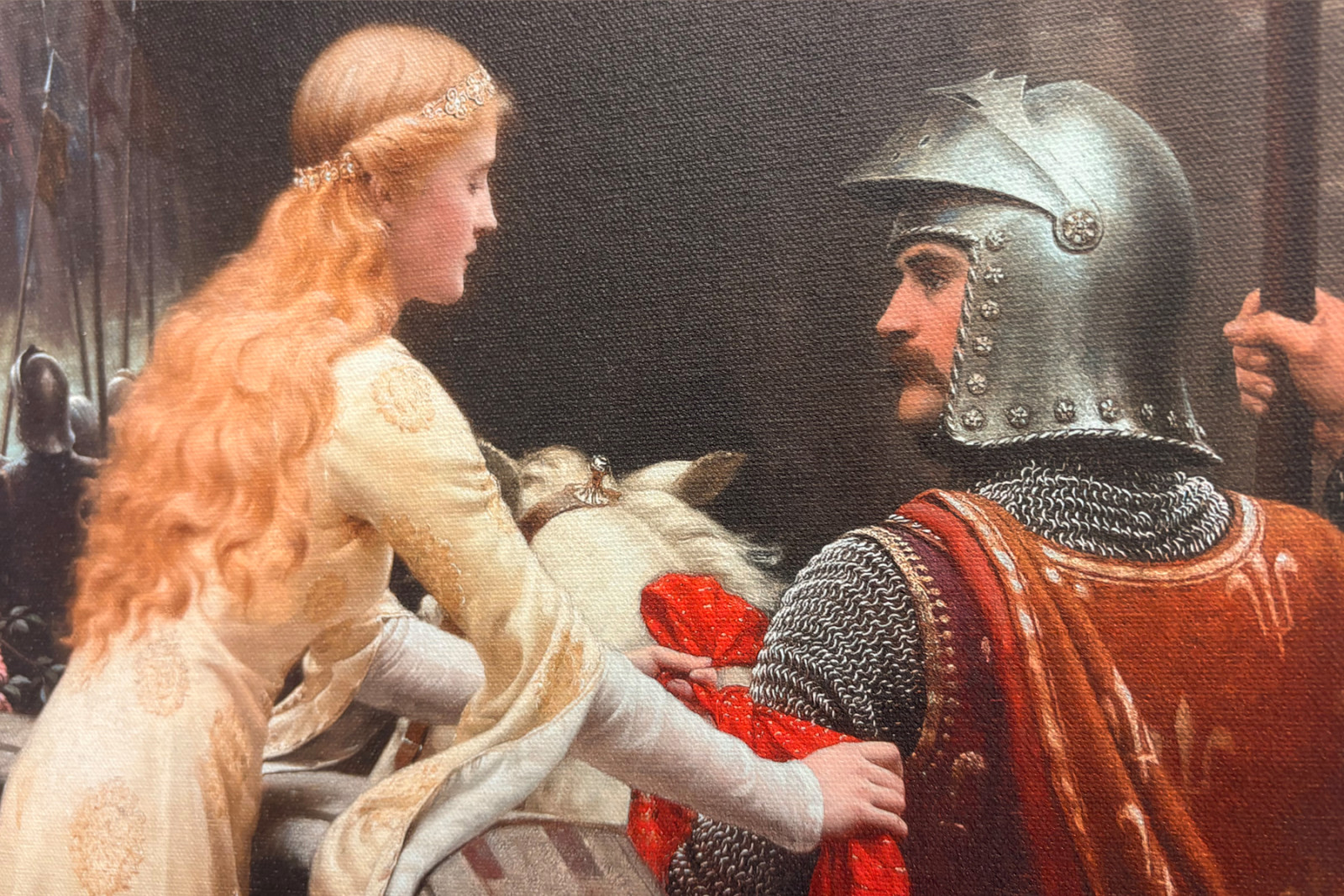
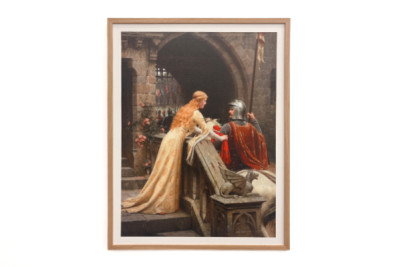
The farewell is not yet complete. On the stone steps of a castle, a young woman leans down towards the knight on horseback and ties a red ribbon around his arm - an ancient custom meant to seal the lover’s safe return and their reunion. Her hands touch his armour as they gaze at one another. There is tenderness in this moment, but also the knowledge of an impending separation. Behind them, a dark gateway opens, revealing more armed men and towering lances. Edmund Leighton composes the scene as if it were a moment frozen in time. The woman’s light-coloured gown falls in a long train over the steps; her golden-red hair glows against the shadows, whilst the knight’s rust-red cloak, together with the sash, forms the colour centre of the composition. Steel, masonry and the white of the horse enclose the two figures. Even the flowers at the left-hand edge and the stone mythical creature on the parapet seem to bear witness to this moment. The title ‘God Speed’ refers to a blessing for a safe journey and a safe return home. Leighton, a British painter of the Victorian era, painted the work in 1900 at the height of his career, drawing on that romantic view of the Middle Ages in which chivalry, loyalty and farewell become timeless emotions. In the same year, the Royal Academy of Arts in London exhibited the work; the historic oil painting, measuring approximately 160 × 116 centimetres, is now in private hands.
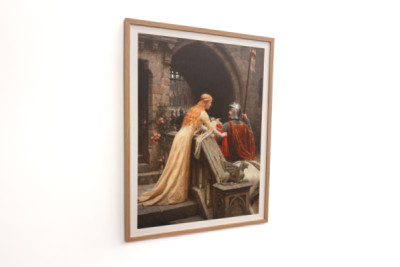
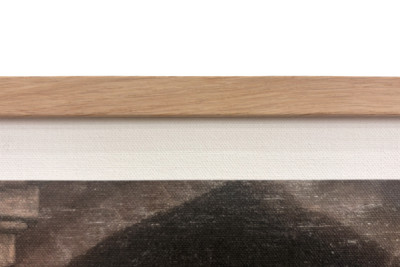
In this 48 × 66-centimetre version, Leonardo’s satin-finished canvas preserves, above all, the precise colour scheme of the scene. The red of the ribbon remains vivid without overshadowing the coppery hue of the knight’s garb; ivory, gold and cool metal provide nuanced contrasts. The ‘Sinead’ decorative frame, made of oak veneer, frames the picture simply - its brown hue complements the hair, embroidery and old stone; this scene needs nothing more. The white border between the opening and the wood creates a brief pause, then the story begins.
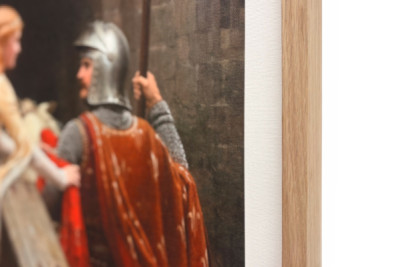
The delicate chain rings, the highlights on the helmet, the small ornaments in her hair - the eye really does linger on such details, because the craftsmanship credibly conveys Leighton’s narrative precision. We hope the new owner will take great pleasure in this piece.
 ×
× 





 +43 4257 29415
 support@meisterdrucke.com
 Mo-Do: 7:00 - 16:00 | Fr: 7:00 - 13:00