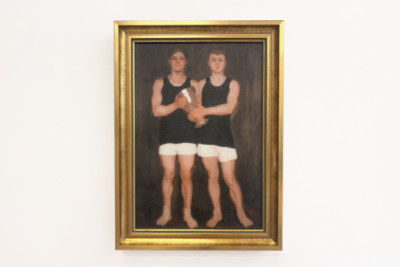
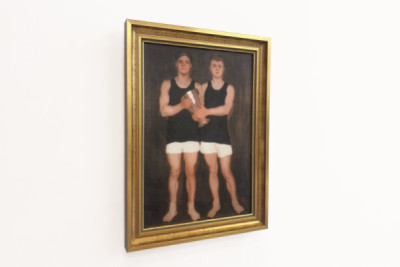
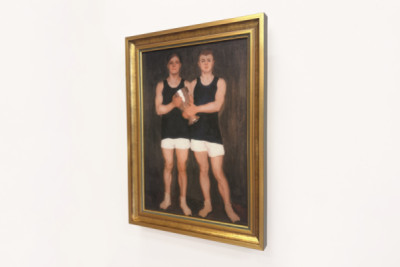
Two young athletes stand side by side against a dark background, holding a silver trophy between them. Black jerseys, white shorts, bare legs, light-coloured socks. Their demeanour is serious, almost stiff. No jubilation, no gesture of triumph. They hold the trophy as if it were an object that must not be dropped. This is precisely where the tension of the picture lies: victory has been achieved, but no one is celebrating it. Károly Ferenczy, one of the defining painters of Hungarian modernism and a leading figure in the Nagybánya artists’ colony, painted the pair in 1915 using soft, broad brushstrokes. The faces remain sketchy; the bodies are constructed from just a few areas of colour. The light falls flat from the front, whilst the background swallows up everything incidental. What remains are two figures, a trophy and a great deal of silence. For a painting of sportsmen, this is astonishingly unheroic - and that is precisely why one pauses before it.
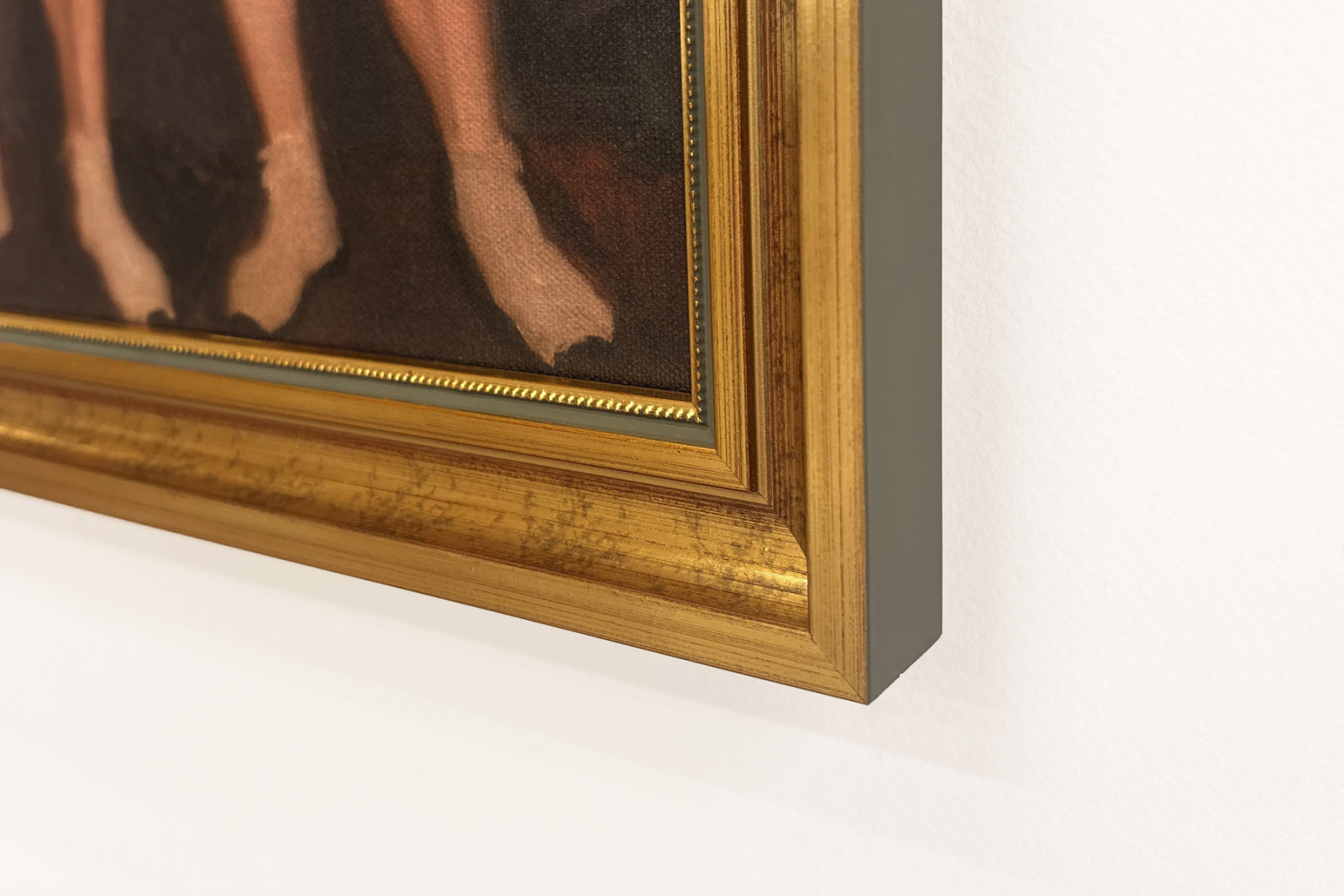
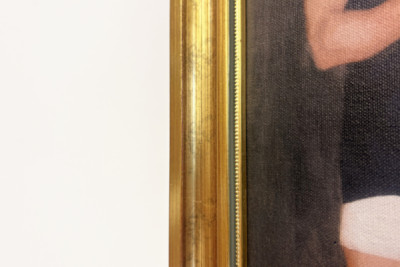
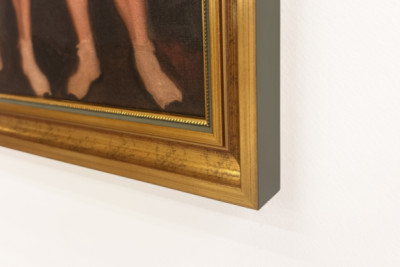
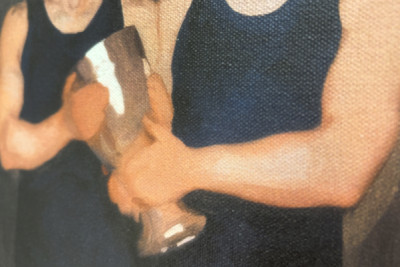
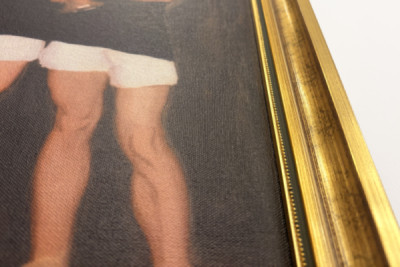
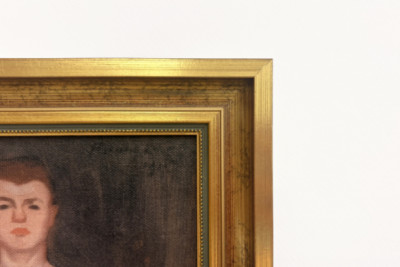
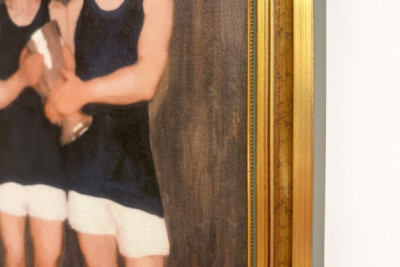
What holds one’s attention longest in this work is the goblet itself. Ferenczy depicts the silver not as a detail, but as a handful of light and dark patches - a white flash on the side, beneath which a warm brown tone reflects the surrounding hands. The print preserves this softness precisely, without smoothing it out. You can see where the brushstroke ends and the surface begins, and the fingers of the two athletes grip the base of the vessel convincingly, even though hardly any contours have been drawn. The transition from the black jersey to the dark background also remains distinct - two different shades of dark, not a blob of colour. The satin-finished surface of the Leonardo canvas ensures that the deep tones do not get lost. Fenja, a slender gold frame with a delicate beaded edge, frames the small 25 x 36 cm canvas without overwhelming it; the cool, almost silvery gold complements the muted colour scheme well. One of those works in which the effort put in remains visible.
A painting of two victors that speaks more of earnestness than of fame - in this small, concentrated version, this effect is even more intense. As one moves in front of it, a subtle shimmer wanders across the satin-finished surface, briefly illuminating the very spot where Ferenczy placed the white highlight on the trophy. The fact that the material and the subject both achieve the same effect here is a quiet stroke of luck in this piece.
 ×
× 





 +43 4257 29415
 support@meisterdrucke.com
 Mo-Do: 7:00 - 16:00 | Fr: 7:00 - 13:00