Among English artists, hardly any other painter is as well known as John Constable. With his landscape paintings, for which he himself made intensive studies in nature, he pursued a particularly high standard in his works. His most famous painting is "The Haywagon" (1821), although Constable himself described his work "Die Kathedrale von Salisbury von den Wiesen aus" (1831) as the epitome of his art. His striving was the search for a natural painting. Cloud depictions, for which the artist made many studies, characterize his landscape paintings and lend them a high degree of tension and liveliness. The clear lines recede in favor of a dynamic coloration.
Constable is said to have had little to do with the theory of painting, but the opposite is the case. The painter dealt with topics of art theory as well as science, history, theology and other subjects on which he later also lectured. At the request of his parents, Constable had learned portrait painting, from which he earned his income. Nevertheless, it is his work as a landscape painter that first made him famous at the Royal Acadey and later became his masterpieces.
 ×
× 






 Passionate Customer Service

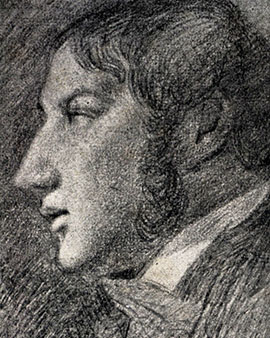
.jpg "The Hay Wain by John Constable")
.jpg)
 - (MeisterDrucke-160620).jpg "Golding Constable's Flower Garden, 1815 (pair of 991) by John Constable")
 - (MeisterDrucke-160620).jpg)
.jpg "The Judges' Walk, Hampstead, c. 1820 by John Constable")
.jpg)
.jpg "Study of the Trunk of an Elm Tree, c. 1824 by John Constable")
.jpg)
.jpg "Salisbury Cathedral, 1823, c. 1915 by John Constable")
.jpg)
.jpg "Study of Cirrus Clouds by John Constable")
.jpg)
.jpg "Salisbury Cathedral from the Bishops Garden by John Constable")
.jpg)
.jpg "Malvern Hall, Warwickshire, 1821 by John Constable")
.jpg)
.jpg "The Mill Stream, 1814-15 by John Constable")
.jpg)
_-_(MeisterDrucke-70126).jpg "Salisbury Cathedral From the Meadows, 1831 by John Constable")
_-_(MeisterDrucke-70126).jpg)
.jpg "Branch Hill Pond, Hampstead by John Constable")
.jpg)
.jpg "View of Salisbury Cathedral from the Bishop's Grounds, Wiltshire, c. 1822 by John Constable")
.jpg)
.jpg "Weymouth Bay, 1816 by John Constable")
.jpg)
.jpg "Dedham Lock and Mill, 1820 by John Constable")
.jpg)
.jpg "Study of Sky and Trees by John Constable")
.jpg)
.jpg "Willy Lott's House, 1816 by John Constable")
.jpg)
.jpg "Weymouth Bay with Approaching Storm by John Constable")
.jpg)
.jpg "Stour Valley and Dedham Church by John Constable")
.jpg)
.jpg "Wivenhoe Park, Essex, 1816 by John Constable")
.jpg)
.jpg "Hadleigh Castle, The Mouth of the Thames - Morning after a Stormy Night, 1829 by John Constable")
.jpg)
.jpg "The Hay Wain, 1821 by John Constable")
.jpg)
.jpg "Barges on the Stour by John Constable")
.jpg)
.jpg "Judge's Walk, Hampstead, c. 1820 by John Constable")
.jpg)
.jpg "Stormy Sea, Brighton by John Constable")
.jpg)
.jpg "Cloud Study by John Constable")
.jpg)
.jpg "Malvern Hall from the South-West by John Constable")
.jpg)
.jpg "Pitt Place, Epsom by John Constable")
.jpg)
_-_(MeisterDrucke-213307).jpg "Elm Trees in Old Hall Park, East Bergholt, 1817 by John Constable")
_-_(MeisterDrucke-213307).jpg)
.jpg "Cloud Study by John Constable")
.jpg)
.jpg "Trees and a Stretch of Water on the Stour by John Constable")
.jpg)
.jpg "A Boat Passing a Lock by John Constable")
.jpg)
.jpg "Sketch for A Boat Passing a Lock by John Constable")
.jpg)
.jpg "The White Horse, 1818-1819 by John Constable")
.jpg)
.jpg "Hampstead Heath, Branch Hill Pond, 1828 by John Constable")
.jpg)
_-_(MeisterDrucke-1433343).jpg "A View from Hampstead Heath (?) by John Constable")
_-_(MeisterDrucke-1433343).jpg)
.jpg "Warehouses and Shipping on the Orwell at Ipswich by John Constable")
.jpg)
.jpg "Golding Constable's Black Riding-Horse, c. 1805-10 by John Constable")
.jpg)
.jpg "A Cloud Study, Sunset by John Constable")
.jpg)
.jpg "Dedham Vale, 1802 by John Constable")
.jpg)
_-_(MeisterDrucke-79628).jpg "Hove Beach, c.1824 by John Constable")
_-_(MeisterDrucke-79628).jpg)
 - (MeisterDrucke-209780).jpg "Study of the Trunk of an Elm Tree, c. 1821 by John Constable")
 - (MeisterDrucke-209780).jpg)
.jpg "The Right Honourable Lady Louisa Manners, c. 1821 by John Constable")
.jpg)
.jpg "Branch Hill Pond, Hampstead Heath, 1828 by John Constable")
.jpg)
.jpg "Rainstorm over the Sea, Seascape Study with Rainclouds, ca. 1824-1828, 22.2 x 31 cm by John Constable")
.jpg)
.jpg "Cloud Study, 1822 by John Constable")
.jpg)
_-_(MeisterDrucke-38171).jpg "Portrait of John Fisher, Archdeacon of Berkshire, 1816 by John Constable")
_-_(MeisterDrucke-38171).jpg)
.jpg "The Hay Wain, 1821, 1912. by John Constable")
.jpg)
_-_(MeisterDrucke-1376660).jpg "Portrait of the Hon. and Rev. George Bridgeman by John Constable")
_-_(MeisterDrucke-1376660).jpg)
.jpg "Salisbury Cathedral from the Bishop’s Grounds, 1823-26 by John Constable")
.jpg)
_c1816-1818_(oil_on_canvas)_-_(MeisterDrucke-1467079).jpg "Willy Lott's House from the Stour (The Valley Farm) by John Constable")
_c1816-1818_(oil_on_canvas)_-_(MeisterDrucke-1467079).jpg)
.jpg "View of Highgate from Hampstead Heath (early 19th century) by John Constable")
.jpg)
 - (MeisterDrucke-212377).jpg "Study of Sea and Sky (A Storm off the South Coast) by John Constable")
 - (MeisterDrucke-212377).jpg)
.jpg "Cloud Study by John Constable")
.jpg)
.jpg "Unknown Image by John Constable")
.jpg)
_-_(MeisterDrucke-89461).jpg "Landscape with Buildings in the Distance by John Constable")
_-_(MeisterDrucke-89461).jpg)
.jpg "Stonehenge by John Constable")
.jpg)
.jpg "Willy Lott's House from the Stour The Valley Farm by John Constable")
.jpg)
.jpg "Dedham Vale: Morning, c. 1811 by John Constable")
.jpg)
.jpg "A View of Osmington Bay, Dorset, Looking Towards Portland Island by John Constable")
.jpg)
_-_(MeisterDrucke-902602).jpg "Rainstorm over the Sea, c.1824-28 by John Constable")
_-_(MeisterDrucke-902602).jpg)
_-_(MeisterDrucke-899646).jpg "View of East Bergholt by John Constable")
_-_(MeisterDrucke-899646).jpg)
_-_(MeisterDrucke-1573463).jpg "A View from Hampstead Heath by John Constable")
_-_(MeisterDrucke-1573463).jpg)
.jpg "View of Hampstead Heath by John Constable")
.jpg)
.jpg "Dedham Vale from Langham by John Constable")
.jpg)
_-_(MeisterDrucke-898832).jpg "Captain Richard Gubbins, c.1804-05 by John Constable")
_-_(MeisterDrucke-898832).jpg)
 - (MeisterDrucke-213310).jpg "Stonehenge, Wiltshire, 1820 by John Constable")
 - (MeisterDrucke-213310).jpg)
.jpg "View Towards the Rectory, East Bergholt by John Constable")
.jpg)
_-_(MeisterDrucke-898215).jpg "A Cloud Study, Sunset, c.1821 by John Constable")
_-_(MeisterDrucke-898215).jpg)
.jpg "Cumulus Clouds over a Landscape, 1822 by John Constable")
.jpg)
 - (MeisterDrucke-153762).jpg "Portrait of Elizabeth Lea and her Children, c.1828 (pair of 95338) by John Constable")
 - (MeisterDrucke-153762).jpg)
.jpg "Cloud Study by John Constable")
.jpg)
.jpg "View Towards the Rectory, East Bergholt by John Constable")
.jpg)
_1820-1821_Sun_137_-_(MeisterDrucke-985480).jpg "Study for “The Hay Wain”. Painting by John Constable (1776-1837), 1820-1821. Oil, 137 x 188 cm. London, Victoria and Albert Museum by John Constable")
_1820-1821_Sun_137_-_(MeisterDrucke-985480).jpg)
.jpg "A View on Hampstead Heath, Early Morning by John Constable")
.jpg)
.jpg "A View from Hampstead Heath by John Constable")
.jpg)
.jpg "Sketch for 'The Opening of Waterloo Bridge Seen from Whitehall Stairs, June 18th 1817' by John Constable")
.jpg)
_-_(MeisterDrucke-92227).jpg "Brighton Beach with colliers, 1824 by John Constable")
_-_(MeisterDrucke-92227).jpg)
.jpg "Sketch for 'The Haywain' by John Constable")
.jpg)
.jpg "Brighton Beach Looking West by John Constable")
.jpg)
.jpg "The Grove, or the Admiral's House in Hampstead by John Constable")
.jpg)
.jpg "Study of Clouds over a Landscape by John Constable")
.jpg)
.jpg "The vegetable garden and fruit garden. Landscape of the English countryside, 1815, Ipswich, Borough Council Museum by John Constable")
.jpg)
.jpg "An Autumnal Landscape at East Bergholt, c. 1805-08 by John Constable")
.jpg)
.jpg "A Road across Hampstead Heath by John Constable")
.jpg)
_-_(MeisterDrucke-1367174).jpg "Landscape with a Watermill by David Lucas")
_-_(MeisterDrucke-1367174).jpg)
.jpg "A View Towards the Rectory, East Bergholt by John Constable")
.jpg)
 - (MeisterDrucke-138311).jpg "Cloud Study: Stormy Sunset by John Constable")
 - (MeisterDrucke-138311).jpg)
_-_(MeisterDrucke-1111495).jpg "Corbels in Solihull Church, Warwickshire by John Constable")
_-_(MeisterDrucke-1111495).jpg)
_Herd_of_Cattle_Beneath_Trees_with_Inset_Sketch_of_-_(MeisterDrucke-1618195).jpg "River Bank with Trees (recto); Herd of Cattle Beneath Trees, with Inset Sketch of Landscape (verso) by John Constable")
_Herd_of_Cattle_Beneath_Trees_with_Inset_Sketch_of_-_(MeisterDrucke-1618195).jpg)
.jpg "The Valley of the Stour with Dedham in the Distance, 1836-37 by John Constable")
.jpg)
.jpg "Dedham Vale from Langham by John Constable")
.jpg)
.jpg "The Lock at Flatford, Seen from a Path by the River by John Constable")
.jpg)
.jpg "In Helmingham Park, Suffolk by John Constable")
.jpg)
.jpg "Portrait of James Lloyd by John Constable")
.jpg)
.jpg "The vale of Newlands: A very stormy afternoon by John Constable")
.jpg)
.jpg "Branch Hill Pond, Hampstead by John Constable")
.jpg)
.jpg "West End Fields, Hampstead by John Constable")
.jpg)
_-_(MeisterDrucke-908529).jpg "Harwich, The Low Lighthouse and Beacon Hill by John Constable")
_-_(MeisterDrucke-908529).jpg)
.jpg "Dedham Vale from Langham, 19th century by John Constable")
.jpg)
 - (MeisterDrucke-206219).jpg "Golding Constable's Kitchen Garden by John Constable")
 - (MeisterDrucke-206219).jpg)

 +43 4257 29415
 support@meisterdrucke.com
 Mo-Do: 7:00 - 16:00 | Fr: 7:00 - 13:00