What does the soft shimmering of light on a vast, windswept plain sound like, captured on canvas If you go in search of the typical Uruguayan expression in painting, you will come across an art that oscillates between melancholy and new beginnings - and always makes the invisible visible between things. Uruguay, the small country between the giants Brazil and Argentina, has developed an artistic voice that is as idiosyncratic as it is poetic: here, European influences merge with Latin American sensuality, and from this combination emerges a visual language that reveals itself not in loud gestures but in subtle nuances.
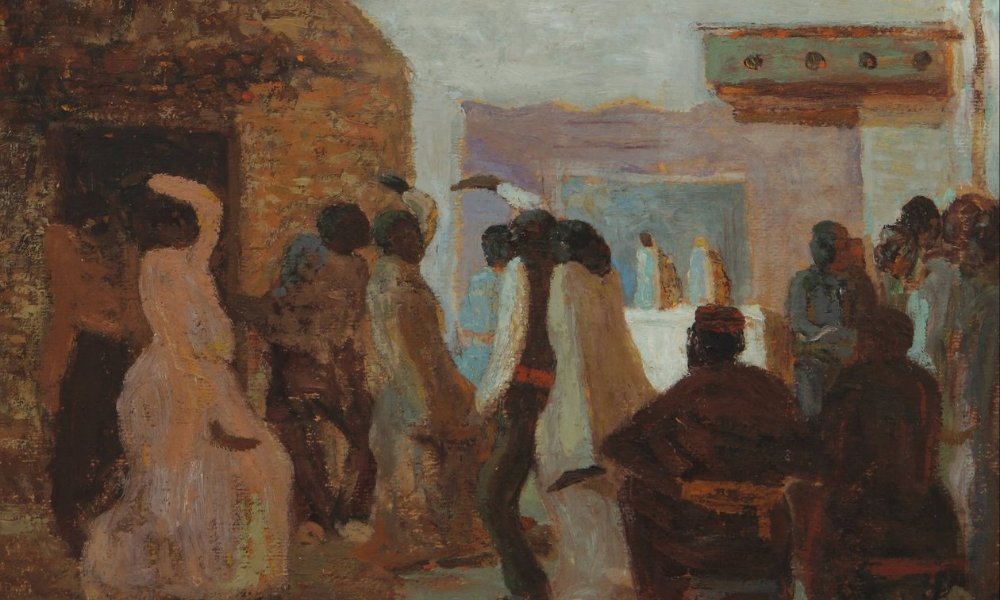
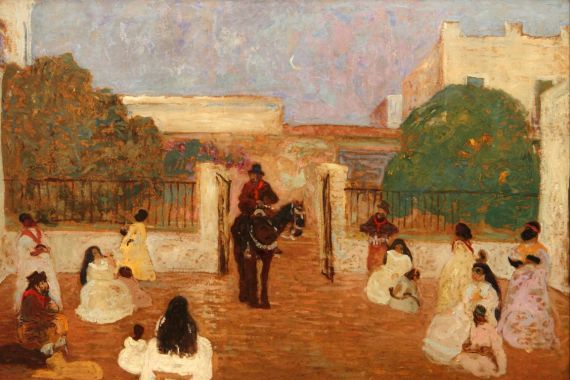
Imagine a watercolour by Pedro Figari: People dancing in soft, almost dreamy colours, the contours blurred as if memory itself were painting. Figari, who is considered one of the fathers of modern Uruguayan painting, has elevated the everyday to mythical status - his scenes of candombe dancers, rural festivals and family portraits are not mere images, but emotional landscapes. In his works, one senses a longing for identity, for a rhythm of his own that breaks away from European models. It is surprising that Figari came to painting late in life, after working as a lawyer and politician - proof of how closely art and society are interwoven in Uruguay.
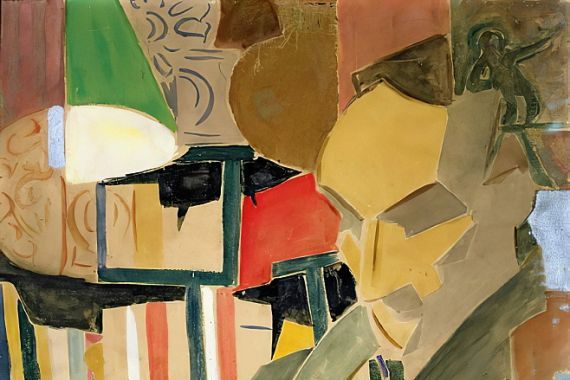
But Uruguayan art history is more than Figari's nostalgic retrospectives. In the vibrant colours of José Cúneo or the expressive lines of Petrona Viera, the light of the Río de la Plata is almost tangible. Viera, one of the first deaf artists in South America, created a quiet but haunting world with her gouaches and drawings, in which the everyday life of children, gardens and animals begins to shine. Her works tell of a sensibility that celebrates the unspectacular - and this is precisely where their power lies. Uruguayan modernism, characterised by artist groups such as the "Taller Torres García", ventured into the abstract: Joaquín Torres García, the great visionary, developed a universal visual language in which symbols, signs and colours merge into a new order. His compositions are like poetic maps that invite the viewer to lose themselves in them.
Photography and printmaking have also undergone a remarkable development in Uruguay. The photographs of Annemarie Heinrich, who was born in Montevideo, capture the faces and moods of a changing society with a fine sense of light and composition. In printmaking, artists such as Nelson Ramos experimented with techniques and materials to explore the limits of the medium - often with surprising results that oscillate between figuration and abstraction.
What makes Uruguayan art so special is its quiet resistance to the obvious. It seeks the mysterious in the everyday, the universal in the personal. Anyone who engages with this art discovers a world in which light not only permeates the landscape, but also the soul - and in which every picture is a promise: that even in the smallest lies hidden the great. For art lovers and collectors of art prints, a cosmos full of poetry, depth and surprising discoveries opens up here.
What does the soft shimmering of light on a vast, windswept plain sound like, captured on canvas If you go in search of the typical Uruguayan expression in painting, you will come across an art that oscillates between melancholy and new beginnings - and always makes the invisible visible between things. Uruguay, the small country between the giants Brazil and Argentina, has developed an artistic voice that is as idiosyncratic as it is poetic: here, European influences merge with Latin American sensuality, and from this combination emerges a visual language that reveals itself not in loud gestures but in subtle nuances.
Imagine a watercolour by Pedro Figari: People dancing in soft, almost dreamy colours, the contours blurred as if memory itself were painting. Figari, who is considered one of the fathers of modern Uruguayan painting, has elevated the everyday to mythical status - his scenes of candombe dancers, rural festivals and family portraits are not mere images, but emotional landscapes. In his works, one senses a longing for identity, for a rhythm of his own that breaks away from European models. It is surprising that Figari came to painting late in life, after working as a lawyer and politician - proof of how closely art and society are interwoven in Uruguay.
But Uruguayan art history is more than Figari's nostalgic retrospectives. In the vibrant colours of José Cúneo or the expressive lines of Petrona Viera, the light of the Río de la Plata is almost tangible. Viera, one of the first deaf artists in South America, created a quiet but haunting world with her gouaches and drawings, in which the everyday life of children, gardens and animals begins to shine. Her works tell of a sensibility that celebrates the unspectacular - and this is precisely where their power lies. Uruguayan modernism, characterised by artist groups such as the "Taller Torres García", ventured into the abstract: Joaquín Torres García, the great visionary, developed a universal visual language in which symbols, signs and colours merge into a new order. His compositions are like poetic maps that invite the viewer to lose themselves in them.
Photography and printmaking have also undergone a remarkable development in Uruguay. The photographs of Annemarie Heinrich, who was born in Montevideo, capture the faces and moods of a changing society with a fine sense of light and composition. In printmaking, artists such as Nelson Ramos experimented with techniques and materials to explore the limits of the medium - often with surprising results that oscillate between figuration and abstraction.
What makes Uruguayan art so special is its quiet resistance to the obvious. It seeks the mysterious in the everyday, the universal in the personal. Anyone who engages with this art discovers a world in which light not only permeates the landscape, but also the soul - and in which every picture is a promise: that even in the smallest lies hidden the great. For art lovers and collectors of art prints, a cosmos full of poetry, depth and surprising discoveries opens up here.
 ×
×








 Passionate Customer Service


 +43 4257 29415
 support@meisterdrucke.com
 Mo-Do: 7:00 - 16:00 | Fr: 7:00 - 13:00