A balmy summer evening in Athens: a group of young artists sit in a small street café at the foot of Lycabettus Hill, their sketchbooks on their knees, their eyes wandering between the glowing golden façades and the hustle and bustle of the city. While the scent of roasted oregano fills the air, it is not just coffee that is shared here, but also inspiration - and has been for centuries. Greece, the land of ancient myths, is far more than just the cradle of classical sculpture and temple architecture. If you take a closer look, you will discover a rich, often surprising history of painting, graphic art and photography that stretches through the centuries like a colourful mosaic.
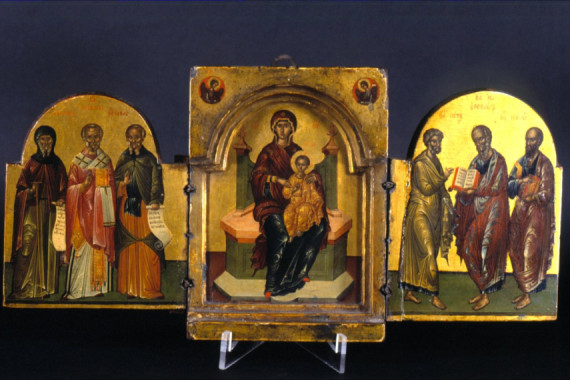
Greek painting, long overshadowed by the famous marble statues, has developed its very own language. As early as Byzantine times, icons were created that not only told religious stories with bright colours and fine lines, but also shaped their very own aesthetic. The painters of this era, such as Theophanes the Cretan, knew how to create an almost unearthly luminosity with tempera on wood - an effect that can still be marvelled at in many Greek churches today. But art did not stand still: With Greece's independence in the 19th century, a new generation of artists emerged who were inspired by Paris and Munich, but always had the light and landscape of their homeland at heart. Nikiforos Lytras, for example, a master of oil painting, captured the everyday life of the Greeks with a mixture of realism and poetry, while Konstantinos Parthenis blurred the boundaries between dream and reality with his pastel watercolours and symbolist motifs.
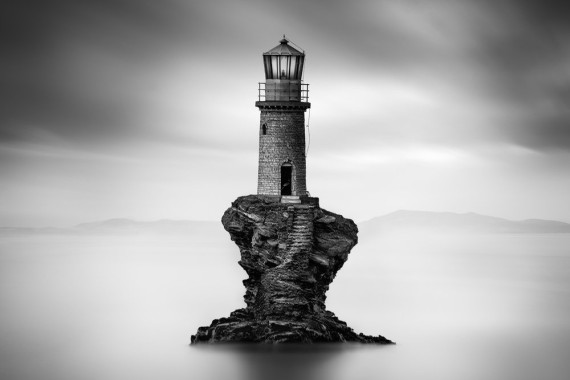
A surprising chapter in Greek art history opens up in photography: Few people know that Greece became an early centre of artistic photography. In the 1930s, Nelly's, whose real name was Elli Sougioultzoglou-Seraidari, captured the light of the Aegean in iconic black and white images that shaped Greece's image abroad. Her photographs of dancers on the Acropolis or of the villages of the Cyclades remain symbols of the combination of tradition and modernity to this day. Printmaking also has a long tradition in Greece: artists such as Vasso Katraki created haunting portraits of everyday life in Greece with their expressive woodcuts, characterised by the political upheavals of the 20th century.
Anyone wandering through the studios of Thessaloniki or the galleries of Athens today will sense how Greek art is constantly reinventing itself - and yet it remains rooted in the special light, the harsh landscape and the vibrant everyday life of the country. Greece is a country where art is not only seen, but lived: on the walls of the cities, in the colours of the markets, in the shade of the olive trees. For art enthusiasts and lovers of high-quality art prints, a world opens up here in which tradition and innovation, light and colour, past and present merge in a unique way.
A balmy summer evening in Athens: a group of young artists sit in a small street café at the foot of Lycabettus Hill, their sketchbooks on their knees, their eyes wandering between the glowing golden façades and the hustle and bustle of the city. While the scent of roasted oregano fills the air, it is not just coffee that is shared here, but also inspiration - and has been for centuries. Greece, the land of ancient myths, is far more than just the cradle of classical sculpture and temple architecture. If you take a closer look, you will discover a rich, often surprising history of painting, graphic art and photography that stretches through the centuries like a colourful mosaic.
Greek painting, long overshadowed by the famous marble statues, has developed its very own language. As early as Byzantine times, icons were created that not only told religious stories with bright colours and fine lines, but also shaped their very own aesthetic. The painters of this era, such as Theophanes the Cretan, knew how to create an almost unearthly luminosity with tempera on wood - an effect that can still be marvelled at in many Greek churches today. But art did not stand still: With Greece's independence in the 19th century, a new generation of artists emerged who were inspired by Paris and Munich, but always had the light and landscape of their homeland at heart. Nikiforos Lytras, for example, a master of oil painting, captured the everyday life of the Greeks with a mixture of realism and poetry, while Konstantinos Parthenis blurred the boundaries between dream and reality with his pastel watercolours and symbolist motifs.
A surprising chapter in Greek art history opens up in photography: Few people know that Greece became an early centre of artistic photography. In the 1930s, Nelly's, whose real name was Elli Sougioultzoglou-Seraidari, captured the light of the Aegean in iconic black and white images that shaped Greece's image abroad. Her photographs of dancers on the Acropolis or of the villages of the Cyclades remain symbols of the combination of tradition and modernity to this day. Printmaking also has a long tradition in Greece: artists such as Vasso Katraki created haunting portraits of everyday life in Greece with their expressive woodcuts, characterised by the political upheavals of the 20th century.
Anyone wandering through the studios of Thessaloniki or the galleries of Athens today will sense how Greek art is constantly reinventing itself - and yet it remains rooted in the special light, the harsh landscape and the vibrant everyday life of the country. Greece is a country where art is not only seen, but lived: on the walls of the cities, in the colours of the markets, in the shade of the olive trees. For art enthusiasts and lovers of high-quality art prints, a world opens up here in which tradition and innovation, light and colour, past and present merge in a unique way.
 ×
×







 Passionate Customer Service


 +43 4257 29415
 support@meisterdrucke.com
 Mo-Do: 7:00 - 16:00 | Fr: 7:00 - 13:00