Utagawa Kunisada was born in 1786 as Sumida Sh?gor? in Honjo, a district of Edo, now Tokyo, as the son of a ferryman who died shortly after Sumida's birth. The inherited ferry business ensured Sh?gor?'s existence regardless of his artistic career. Sh?gor?'s early sketches made an impression on the head of the Utagawa School: Utagawa Toyokuni (1769 - 1825). Around 1800 Sh?gor? was accepted into the Utagawa School by Toyokuni and was given an artist's name by him, which was partly composed of the name of the school and that of his master: Utagawa Kunisada (borrowed from Toyokuni).
With his color woodblock prints, which included large-format prints and book illustrations, Kunisada quickly became the most important artist of the Utagawa school. His first large-format print of 1807 remained an exception for two years. From 1809 onwards, he also produced the prints for which Kunisada became particularly famous: portraits of actors, often in Kabuki costume, and bijingas ("pictures of beautiful women"). Of Kunisada's approximately 20000 color woodblock prints (not counting illustrations for several hundred books), a full 60% are portraits of actors and 15% are bijingas. With his extensive work Kunisada is one of the most productive artists in history. At the same time, he was the trendsetter of his time and had a significant influence on other artists of the Utagawa school.
 ×
×







 Passionate Customer Service

.jpg "One of eight views of Kanjin Sumo, published by Tsutaya, 19th century, triptych, oban size, colour woodblock print by Utagawa Kunisada")
.jpg)
 - (MeisterDrucke-566091).jpg "Scene from Omagasaki, c. 1858 by Utagawa Kunisada")
 - (MeisterDrucke-566091).jpg)
.jpg "Fudo: Ichikawa Ebizo V as the Mystical Image of Fudo Myoo in the Centre, Ichikawa Saruzo I as Kongara doji on the Right and Ichikawa Komazo VII as Seitaka doji on the Left by Utagawa Kunisada")
.jpg)
.jpg "Ichikawa Danjuro VII as Kan Shojo in the Mt. Tenpai Scene, from the series Famous Kabuki Plays by Utagawa Kunisada")
.jpg)
_-_(MeisterDrucke-308645).jpg "The sumo wrestler Abumatsu Rokunosuke, c. 1835 by Utagawa Kunisada")
_-_(MeisterDrucke-308645).jpg)
_Kunisada_-_Two_Women_in_a_Flower_Garden_by_Utagawa_Kunisada_woodcut_crepon_technique_-_(MeisterDrucke-1112446).jpg "Two Women in a Flower Garden by Utagawa Kunisada")
_Kunisada_-_Two_Women_in_a_Flower_Garden_by_Utagawa_Kunisada_woodcut_crepon_technique_-_(MeisterDrucke-1112446).jpg)
_Kunisada_-_Combat_des_lutteurs_de_sumo_Uzugafuchi_et_Washigahama_Estampe_de_Utagawa_Kunisad_-_(MeisterDrucke-962269).jpg "Sumo Wrestling Match between Uzugafuchi and Washigahama by Utagawa Kunisada")
_Kunisada_-_Combat_des_lutteurs_de_sumo_Uzugafuchi_et_Washigahama_Estampe_de_Utagawa_Kunisad_-_(MeisterDrucke-962269).jpg)
.jpg "Triptych depicting a prince, princess and court ladies boating on a garden pond under a full moon in June, probably from the")
.jpg)
.jpg "Night Scene with Girls and Lanterns by Utagawa Kunisada")
.jpg)
.jpg "Butterflies and Peonies by Utagawa Kunisada")
.jpg)
 - (MeisterDrucke-637464).jpg "Untitled, 1844-1846 by Utagawa Kunisada")
 - (MeisterDrucke-637464).jpg)
.jpg "Bull Lying beneath a Willow Tree by Utagawa Kunisada")
.jpg)
_Kunisada_-_Ukiyo-e_Print_of_an_Actor_Playing_a_Samurai_by_Kunisada_-_(MeisterDrucke-980074).jpg "Ukiyo-e Print of an Actor Playing a Samurai by Kunisada by Utagawa Kunisada")
_Kunisada_-_Ukiyo-e_Print_of_an_Actor_Playing_a_Samurai_by_Kunisada_-_(MeisterDrucke-980074).jpg)
 - (MeisterDrucke-74018).jpg "The Blood-Stained Witch - Figure from Japanese Theatre, 1852 by Utagawa Kunisada")
 - (MeisterDrucke-74018).jpg)
.jpg "(detail) by Utagawa Kunisada")
.jpg)
.jpg "Courtesans Kuretaka and Tamakoto by Utagawa Kunisada")
.jpg)
.jpg "Night Scene with Girls and Lanterns by Utagawa Kunisada")
.jpg)
_Kunisada_-_Choko_and_Cho-un_fighting_on_hill_ca_1836_by_Kunisada_(1786-1865)_Heroes_of_Popu_-_(MeisterDrucke-1101080).jpg "Choko and Cho-un fighting on hill, ca 1836, by Kunisada, Heroes of Popular History of the Three Kingdoms series, Ukiyo-e, Oban tate-e woodcut, Edo period, Japan by Utagawa Kunisada")
_Kunisada_-_Choko_and_Cho-un_fighting_on_hill_ca_1836_by_Kunisada_(1786-1865)_Heroes_of_Popu_-_(MeisterDrucke-1101080).jpg)
.jpg "Young Girl with Umbrella by Utagawa Kunisada")
.jpg)
.jpg "Courtesans Promenading by Sea by Utagawa Kunisada")
.jpg)
.jpg "Scene of Namishichi Committing Suicide from the Story Oguri gaiden, 1847-1852 by Utagawa Kunisada")
.jpg)
.jpg "Scene from Act XI of")
.jpg)
 - (MeisterDrucke-178600).jpg "Autumn Maple from the series,")
 - (MeisterDrucke-178600).jpg)
.jpg "A sold-out performance is celebrated backstage at the Nakamura Kabuki Theatre by Utagawa Kunisada")
.jpg)
.jpg "From the series \"Famous Actors Past and Present\" by Utagawa Kunisada")
.jpg)
.jpg "From the series \"Famous Actors Past and Present\" by Utagawa Kunisada")
.jpg)
 - (MeisterDrucke-195551).jpg "The Actor Ichikawa Ebizo VII in a Shibaraku Role, Edo Period, 1833 by Utagawa Kunisada")
 - (MeisterDrucke-195551).jpg)
.jpg "From the series")
.jpg)
.jpg "Actor Sawamura Tossho in the Play Uguisuzuka")
.jpg)
_(colour_woodblock_print)_-_(MeisterDrucke-945558).jpg "Beauties during a cockfight (Bijin Toriaiu) by Utagawa Kunisada")
_(colour_woodblock_print)_-_(MeisterDrucke-945558).jpg)
.jpg "From the Series")
.jpg)
.jpg "Woman Putting Out a Light (from the series Modern Customs: Frost Beneath the Stars) by Utagawa Kunisada")
.jpg)
.jpg "From the Series")
.jpg)
.jpg "A Standing Courtesan in a Black Kimono with White Flowerheads Holding a Wad of Paper by Utagawa Kunisada")
.jpg)
.jpg "Moon from the Series")
.jpg)
.jpg "Kabuki Actor by Utagawa Kunisada")
.jpg)
_(colour_woodblock_print)_-_(MeisterDrucke-37732).jpg "Winter, from the series")
_(colour_woodblock_print)_-_(MeisterDrucke-37732).jpg)
.jpg "Chokichi, \"the Untamed Horse\" by Utagawa Kunisada")
.jpg)
.jpg "Courtesan likened to a painting by Moronobu, from the series")
.jpg)
.jpg "Kagekiyo: Ichikawa Danjuro VIII as Chichibu Shoji Shigetada and Ichikawa Ebizo V as Akushichibyoe Kagekiyo by Utagawa Kunisada")
.jpg)
![Shanao [Yoshitsune] Learns Martial Arts in Sojogatani by Utagawa Kunisada](/kunstwerke/300px/Utagawa_Kunisada_-_Shanao_Yoshitsune_Learns_Martial_Arts_in_Sojogatani_Shanao_Sojogatani_ni_h_1830s_-_(MeisterDrucke-1151950).jpg "Shanao [Yoshitsune] Learns Martial Arts in Sojogatani by Utagawa Kunisada")
![Shanao [Yoshitsune] Learns Martial Arts in Sojogatani by Utagawa Kunisada](/kunstwerke/400w/Utagawa_Kunisada_-_Shanao_Yoshitsune_Learns_Martial_Arts_in_Sojogatani_Shanao_Sojogatani_ni_h_1830s_-_(MeisterDrucke-1151950).jpg)
.jpg "The Actor Iwai Hanshiro V as Yaoya Oshici from the series")
.jpg)
 c1845 (woodblock) - (MeisterDrucke-215254).jpg "The Flute (Yokobue), c.1845 by Utagawa Kunisada")
 c1845 (woodblock) - (MeisterDrucke-215254).jpg)
.jpg "The village of Yatsuhashi at Okasaki, from the series")
.jpg)
.jpg "The Actors Ichikawa Kodanji IV as the Ghost of Koheiji with wai Kumesaburo as O-Tsuka, Wife of Koheiji, Sawamura Tossho II and Kijiro in a Scene from the Play")
.jpg)
 - (MeisterDrucke-203220).jpg "Buckets of Good Wishes Year after Year: The Inherited Glory of the Ichikawa Clan, Edo period, c.1850 by Utagawa Kunisada")
 - (MeisterDrucke-203220).jpg)
.jpg "Kenuki: Ichikawa Ebizo V as Kumedera Danjo by Utagawa Kunisada")
.jpg)
 - (MeisterDrucke-166952).jpg "Actor Matsumoto Koshiro V as Noto no Kami, Edo Period, Mid 1830s by Utagawa Kunisada")
 - (MeisterDrucke-166952).jpg)
.jpg "The Eighteen Plays of the Ichikawa Clan: Actor Ichikawa Danjuro VIII as the Medicine Vendor Toraya Tokichi by Utagawa Kunisada")
.jpg)
.jpg "Travel by Utagawa Kunisada")
.jpg)
_Kunisada_-_Onoe_Kikugoro_III_in_the_role_of_a_lover_c1827-30_(coloured_woodblock_print)_-_(MeisterDrucke-1099496).jpg "Onoe Kikugoro III in the Role of a Lover, c.1827-30 by Utagawa Kunisada")
_Kunisada_-_Onoe_Kikugoro_III_in_the_role_of_a_lover_c1827-30_(coloured_woodblock_print)_-_(MeisterDrucke-1099496).jpg)
_Edo_period_c183_-_(MeisterDrucke-310019).jpg "Military Tales of Han and Chu: Xiang Yu by Utagawa Kunisada")
_Edo_period_c183_-_(MeisterDrucke-310019).jpg)
.jpg "The garden bathtub by Utagawa Kunisada")
.jpg)
.jpg "Kamezo As The Warrior Monk, in a scene from Sembouzakura at the Ichimura Theatre by Utagawa Kunisada")
.jpg)
.jpg "Muraogi, from the series The False Murasaki")
.jpg)
.jpg "From the series")
.jpg)
.jpg "From the series")
.jpg)
.jpg "Kanjincho: Ichikawa Ebizo V as Musashibo Benkei and Ichikawa Danjuro VIII as Togashi Saemon by Utagawa Kunisada")
.jpg)
_Kunisada_-_Detail_of_Character_Five_from_Five_Characters_from_a_Play_by_Toyokuni_(see_also_-_(MeisterDrucke-1114189).jpg "Detail of Character Five from")
_Kunisada_-_Detail_of_Character_Five_from_Five_Characters_from_a_Play_by_Toyokuni_(see_also_-_(MeisterDrucke-1114189).jpg)
_-_(MeisterDrucke-37041).jpg "The Actor Ichikawa Danjuro VII as a Samurai Warrior by Utagawa Kunisada")
_-_(MeisterDrucke-37041).jpg)
 - (MeisterDrucke-196226).jpg "The actor Onoe Waichi II as Watonai, 1857 by Utagawa Kunisada")
 - (MeisterDrucke-196226).jpg)
 - (MeisterDrucke-264670).jpg "Kabuki Actor, Edo period by Utagawa Kunisada")
 - (MeisterDrucke-264670).jpg)
.jpg "Ichikawa Danjūrō VII as the Warrior Minamoto no Yorimasa by Utagawa Kunisada")
.jpg)
_Kunisada_-_Art_japonais_preparatifs_de_sortie_concours_de_beaute_feminine_(Coming_Out_Prepa_-_(MeisterDrucke-1318900).jpg "Coming Out Preparation - Competition of Beautiful Women by Utagawa Kunisada")
_Kunisada_-_Art_japonais_preparatifs_de_sortie_concours_de_beaute_feminine_(Coming_Out_Prepa_-_(MeisterDrucke-1318900).jpg)
 - (MeisterDrucke-39846).jpg "Bando Mitsugoro III, 1820 by Utagawa Kunisada")
 - (MeisterDrucke-39846).jpg)
.jpg "The Courtesan Omitsu of the Yamato House by Utagawa Kunisada")
.jpg)
.jpg "Abalone Divers off the Coast of Ise, from an Untitled Landscape Series by Utagawa Kunisada")
.jpg)
.jpg "Autumn, Hanayashiki: A geisha with a pipe, design for a fan from a set of four illustrating the seasons by Utagawa Kunisada")
.jpg)
.jpg "Moronao, the Villain of")
.jpg)
.jpg "Print, 19th century by Utagawa Kunisada")
.jpg)
_(colour_woodblock_print)_-_(MeisterDrucke-1011349).jpg "View of Kakegawa by Utagawa Kunisada")
_(colour_woodblock_print)_-_(MeisterDrucke-1011349).jpg)
.jpg "Ichikawa Danjūrō VII as Usui no Sadamitsu by Utagawa Kunisada")
.jpg)
.jpg "Celebration for the Turning Color of Maple Leaves, January 1857 by Utagawa Kunisada")
.jpg)
.jpg "Kanjincho: Ichikawa Ebizo V as Togashi Saemon and Ichikawa Danjuro VIII as Musashibo Benkei by Utagawa Kunisada")
.jpg)
_(colour_woodblock_print)_-_(MeisterDrucke-974643).jpg "Sudden Shower in the Summer Heat by Utagawa Kunisada")
_(colour_woodblock_print)_-_(MeisterDrucke-974643).jpg)
.jpg "From the series")
.jpg)
.jpg "Print by Utagawa Kunisada")
.jpg)
.jpg "Woodblock Print -")
.jpg)
.jpg "Man and Woman, from the series The Five Chivalrous Dandies by Utagawa Kunisada")
.jpg)
.jpg "Summer, the river at Ryoguku; A geisha combing her hair, design for a fan from a set of four illustrating the seasons by Utagawa Kunisada")
.jpg)
.jpg "Fuwa: Ichikawa Ebizo V as Fuwa Banzaemon and Ichikawa Danjuro VIII as Nagoya Sanza by Utagawa Kunisada")
.jpg)
_(colour_woodblock_print)_-_(MeisterDrucke-1033861).jpg "View of Yui by Utagawa Kunisada")
_(colour_woodblock_print)_-_(MeisterDrucke-1033861).jpg)
.jpg "From the series")
.jpg)
.jpg "Illustration of the Dohyo-Iri of Grand Champion Shiranui Dakuemon, Published by Yamaguchiya Tobie by Utagawa Kunisada")
.jpg)
.jpg "The Actor Onoe Kikugoro III in the Role of Oboshi Yuranosuke by Utagawa Kunisada")
.jpg)
.jpg)
.jpg)
 1863 (colour woodbl - (MeisterDrucke-242912).jpg "Narumi, from the Series")
 1863 (colour woodbl - (MeisterDrucke-242912).jpg)
.jpg "Print by Utagawa Kunisada")
.jpg)
.jpg "Kabuki Actor in a Female Role Standing with a Fan by Utagawa Kunisada")
.jpg)
.jpg "Ichimura Takenojo V as Yukanba Kozo Kichiza, from A Modern Water Margin Kinsei suikoden, 1862 by Utagawa Kunisada")
.jpg)
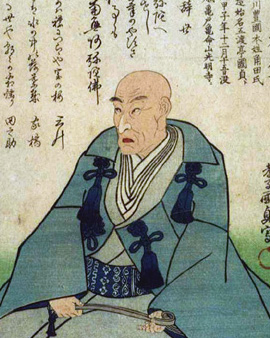
_-_(MeisterDrucke-229811).jpg "Memorial Portrait of Utagawa Hiroshige by Utagawa Kunisada")
_-_(MeisterDrucke-229811).jpg)
.jpg "Ichikawa Danjūrō VII as Daruma by Utagawa Kunisada")
.jpg)
 - (MeisterDrucke-162058).jpg "Onoe Kikugoro III as Shimbei in Sukeroku yukari no Edo zakura, c.1830 by Utagawa Kunisada")
 - (MeisterDrucke-162058).jpg)
.jpg "Print by Utagawa Kunisada")
.jpg)
.jpg "Print by Utagawa Kunisada")
.jpg)
_-_(MeisterDrucke-1011334).jpg "Actor Nakamura Shikan IV as Sen by Utagawa Kunisada")
_-_(MeisterDrucke-1011334).jpg)
_(colour_woodblock_print)_-_(MeisterDrucke-974714).jpg "The Fifth Month (Satsuki) by Utagawa Kunisada")
_(colour_woodblock_print)_-_(MeisterDrucke-974714).jpg)
.jpg "Ichikawa Ebizo V as Musashibo Benkei in Kanjincho by Utagawa Kunisada")
.jpg)
.jpg "Print, 19th century by Utagawa Kunisada")
.jpg)
_September_1860_-_(MeisterDrucke-321681).jpg "Rehearsal of a Kabuki Play, September 1860 by Utagawa Kunisada")
_September_1860_-_(MeisterDrucke-321681).jpg)

 +43 4257 29415
 support@meisterdrucke.com
 Mo-Do: 7:00 - 16:00 | Fr: 7:00 - 13:00