In the 16th century art had reached an international level. Italy was still considered the cradle of art. Artists from all parts of Europe travelled the country and took impressions with them into the respective regions of their sphere of influence. Peter Paul Rubens witnessed the development of the Baroque in Italy and was impressed by Tizians's intense coloration and its skill in using light effects. In Antwerp, Rubens used the seclusion to develop his own painting style and a baroque pictorial language from the knowledge gained. The weapons in the Eighty Years War were at rest and Antwerp was in a deep sleep of artistic development. Ruben's progressive ideas met with great interest and made him a much sought-after artist.
Rubens is closely connected with the depictions of women with all physical attractions. Rubens' language shows respect and esteem for the female forms. The three Graces symbolise chastity, beauty and love. The bodies full of movement, the nuances of the skin are the defining features of the picture and framed by a colourful composition. Peter Paul Rubens developed a dynamic and colourful style. He believed in the great importance of brushstroke and colour. His figures show joy of life and are open to the pleasures of the world. At the same time Rubens combines the real with the mystical. Delacroix and Renoir take up similar ways of representation and develop the brushwork further. Rubens' ability to lift worldly themes into an allegorical context assured the painter of the good will of the different schools of thought in the country. Rubens inspired without polarizing and became a respected and wealthy artist.
Rubens tolerated only a few painters beside him. The artist founded a studio and took aspiring artists to his side. The order situation was often so brilliant that Rubens limited himself to making sketches and gave the painting to his apprentices. Rubens used the skills of diplomacy to communicate the still controversial situation in the country. His positive influence was rewarded with a knighthood. Wealth and power could not protect the great artist from one of the worst diseases that can strike a painter. Rubens fell ill with gout. Many of his late works lack the dynamism that could be due to the illness or the lifelong development that characterized Rubens.
 ×
×







 Passionate Customer Service

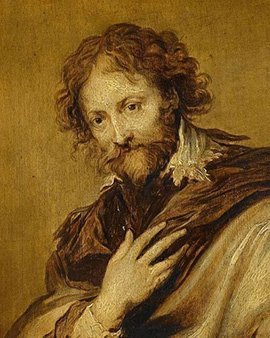
.jpg "Old Woman and Boy with Candles, c. 1616-1617 by Peter Paul Rubens")
.jpg)
.jpg "The Fall of the Damned into Hell by Peter Paul Rubens")
.jpg)
.jpg "Two Satyrs, c. 1617-1618 by Peter Paul Rubens")
.jpg)
.jpg "St. George and the Dragon, c. 1606 by Peter Paul Rubens")
.jpg)
.jpg "Old Woman with a Basket of Coal by Peter Paul Rubens")
.jpg)
.jpg "The Massacre of the Innocents by Peter Paul Rubens")
.jpg)
_devorant_son_fils_Peinture_de_Pierre_Paul_(Pierre-Paul)_Rube_-_(MeisterDrucke-939279).jpg "“Saturn (or Cronos) Devouring His Son”, painting by Peter Paul Rubens (1577-1640), 1636-1637, Madrid, Museo del Prado by Peter Paul Rubens")
_devorant_son_fils_Peinture_de_Pierre_Paul_(Pierre-Paul)_Rube_-_(MeisterDrucke-939279).jpg)
.jpg "The Fall of the Damned, c. 1620 by Peter Paul Rubens")
.jpg)
.jpg "Saint Michael expelling Lucifer and the Rebellious Angels, 1622 by Peter Paul Rubens")
.jpg)
 1603 - (MeisterDrucke-38779).jpg "Equestrian portrait of the Duke of Lerma (1553-1625), 1603 by Peter Paul Rubens")
 1603 - (MeisterDrucke-38779).jpg)
.jpg "The Feast of Venus by Peter Paul Rubens")
.jpg)
.jpg "Portrait of Lady-in-Waiting to the Infanta Isabella by Peter Paul Rubens")
.jpg)
.jpg "The Kidnapping of Ganymede by Peter Paul Rubens")
.jpg)
.jpg "David Slaying Goliath by Peter Paul Rubens")
.jpg)
_Oil_on_wood_c_1615_Dimension_-_(MeisterDrucke-1028722).jpg "The Apostle Paul, c. 1615. Dimensions: 105.6 x 74 cm. State Hermitage Museum, St. Petersburg by Peter Paul Rubens")
_Oil_on_wood_c_1615_Dimension_-_(MeisterDrucke-1028722).jpg)
.jpg "The Birth of the Milky Way by Peter Paul Rubens")
.jpg)
_Oil_on_canvas_c_1620_-_(MeisterDrucke-941247).jpg "The Adoration of the Magi. c. 1620. Dimensions: 235x277,5 cm. State Hermitage, St. Petersburg by Peter Paul Rubens")
_Oil_on_canvas_c_1620_-_(MeisterDrucke-941247).jpg)
.jpg "Bacchus, 1638-1640 by Peter Paul Rubens")
.jpg)
.jpg "Clara Serena, c. 1616 by Peter Paul Rubens")
.jpg)
.jpg "The Meeting of Abraham and Melchizedek, c. 1626 by Peter Paul Rubens")
.jpg)
.jpg "Leda with the Swan by Peter Paul Rubens")
.jpg)
.jpg "Head of Medusa by Peter Paul Rubens")
.jpg)
.jpg "The Drunken Silenus, c. 1617-18 by Peter Paul Rubens")
.jpg)
.jpg "The Arrival of Marie de Medici in Marseilles, 3rd November 1600, 1621-25 by Peter Paul Rubens")
.jpg)
.jpg "Diana and her Nymphs Surprised by Fauns, 1638-40 by Peter Paul Rubens")
.jpg)
.jpg "Garland of Fruit, c. 1615-17 by Peter Paul Rubens")
.jpg)
.jpg "Venus mourning Adonis by Peter Paul Rubens")
.jpg)
.jpg "Hercules Fighting the Nemean Lion by Peter Paul Rubens")
.jpg)
.jpg "Thetis receiving Achilles")
.jpg)
.jpg "Rape of the Daughters of Leucippus by Peter Paul Rubens")
.jpg)
.jpg "Portrait of Isabella Brant, c. 1625-26 by Peter Paul Rubens")
.jpg)
.jpg "The Judgement of Paris, 1639 by Peter Paul Rubens")
.jpg)
.jpg "The Victory and Death of Decius Mus by Peter Paul Rubens")
.jpg)
.jpg "Venus frigida by Peter Paul Rubens")
.jpg)
.jpg "Cain slaying Abel by Peter Paul Rubens")
.jpg)
.jpg "Ignatius Loyola, engraved by William Holl the Younger, c.1830 by Peter Paul Rubens")
.jpg)
 - (MeisterDrucke-88703).jpg "The Battle of Anghiari after Leonardo da Vinci (1452-1519) by Peter Paul Rubens")
 - (MeisterDrucke-88703).jpg)
.jpg "Cimon and Iphigenia, 1617 by Peter Paul Rubens")
.jpg)
.jpg "Bacchanalia by Peter Paul Rubens")
.jpg)
_-_(MeisterDrucke-1547767).jpg "Jupiter and Danae by Peter Paul Rubens")
_-_(MeisterDrucke-1547767).jpg)
.jpg "Prometheus Bound by Peter Paul Rubens")
.jpg)
_-_(MeisterDrucke-896615).jpg "Daniel and the Lions Den by Peter Paul Rubens")
_-_(MeisterDrucke-896615).jpg)
.jpg "The Apotheosis of King James I, The Rubens Ceiling, Banqueting House, Whitehall, c.1629-34 by Peter Paul Rubens")
.jpg)
_-_(MeisterDrucke-1635211).jpg "The Rape of the Sabine Women, c.1635-40 by Peter Paul Rubens")
_-_(MeisterDrucke-1635211).jpg)
.jpg "Psyche and Sleeping Cupid by Peter Paul Rubens")
.jpg)
.jpg "The miracles of St. Francis Xavier by Peter Paul Rubens")
.jpg)
_-_(MeisterDrucke-1029360).jpg "Portrait of a Flemish Gentleman with a Ruff by Peter Paul Rubens")
_-_(MeisterDrucke-1029360).jpg)
_-_(MeisterDrucke-100138).jpg "Hippopotamus and Crocodile Hunt, c.1615-16 by Peter Paul Rubens")
_-_(MeisterDrucke-100138).jpg)
.jpg "St. Thomas by Peter Paul Rubens")
.jpg)
.jpg "Psyche by Peter Paul Rubens")
.jpg)
.jpg "The Garden of Love by Peter Paul Rubens")
.jpg)
.jpg "Venus and Adonis by Peter Paul Rubens")
.jpg)
.jpg "Christ triumphing over Death and Sin by Peter Paul Rubens")
.jpg)
.jpg "The Drunken Hercules, Led by a Nymph and a Satyr by Peter Paul Rubens")
.jpg)
.jpg "Pythagoras Advocating Vegetarianism by Peter Paul Rubens")
.jpg)
.jpg "Deborah Kip, Wife of Sir Balthasar Gerbier, and Her Children by Peter Paul Rubens")
.jpg)
.jpg "Adam and Eve by Peter Paul Rubens")
.jpg)
.jpg "The Fall of the Damned by Peter Paul Rubens")
.jpg)
.jpg "The Holy Trinity by Peter Paul Rubens")
.jpg)
.jpg "Portrait of the Artist by Peter Paul Rubens")
.jpg)
.jpg "Moses and the Brazen Serpent by Peter Paul Rubens")
.jpg)
.jpg "Orpheus and Eurydice by Peter Paul Rubens")
.jpg)
.jpg "Head of Medusa by Peter Paul Rubens")
.jpg)
.jpg "Venus and Adonis by Peter Paul Rubens")
.jpg)
.jpg "Ceres and Pan by Peter Paul Rubens")
.jpg)
.jpg "Christ appointing Saint Roch as patron saint of the plague victims by Peter Paul Rubens")
.jpg)
.jpg "The Meeting of David and Abigail by Peter Paul Rubens")
.jpg)
.jpg "Perseus liberating Andromeda, c.1620 by Peter Paul Rubens")
.jpg)
.jpg "Abundance by Peter Paul Rubens")
.jpg)
.jpg "The Three Graces, ca. 1620-1623 by Peter Paul Rubens")
.jpg)
.jpg "The Reconciliation of Jacob and Esau by Peter Paul Rubens")
.jpg)
 - (MeisterDrucke-146421).jpg "Woodland Scene by Peter Paul Rubens")
 - (MeisterDrucke-146421).jpg)
_and_her_son_Frans_(oil_on_panel)_-_(MeisterDrucke-897975).jpg "Helene Fourment and her son Frans by Peter Paul Rubens")
_and_her_son_Frans_(oil_on_panel)_-_(MeisterDrucke-897975).jpg)
.jpg "Susanna and the Elders by Peter Paul Rubens")
.jpg)
.jpg "Feasting and Dancing Peasants by Peter Paul Rubens")
.jpg)
.jpg "The Union of Water with Earth by Peter Paul Rubens")
.jpg)
.jpg "Saint Ambrose and Emperor Theodosius by Peter Paul Rubens")
.jpg)
.jpg "St. Matthias by Peter Paul Rubens")
.jpg)
.jpg "The Drunken Hercules, Led by a Nymph and a Satyr, ca. 1614 by Peter Paul Rubens")
.jpg)
.jpg "Lion Hunt by Peter Paul Rubens")
.jpg)
.jpg "A View of Het Steen in the Early Morning by Peter Paul Rubens")
.jpg)
.jpg "Portrait of Caspar Schoppe by Peter Paul Rubens")
.jpg)
.jpg "The Three Graces, c. 1635 by Peter Paul Rubens")
.jpg)
.jpg "The Allegory of Hearing by Peter Paul Rubens")
.jpg)
.jpg "Bacchanal by Peter Paul Rubens")
.jpg)
.jpg "Lot and His Daughters by Peter Paul Rubens")
.jpg)
.jpg "Hélène Fourment with a Carriage by Peter Paul Rubens")
.jpg)
.jpg "Study of a nude male torso by Peter Paul Rubens")
.jpg)
_Rubens_(or_Peter_Paul_or_Petru_-_(MeisterDrucke-1030189).jpg "Tiger Hunt, c. 1616, 2.56 x 3.24 m, Rennes, Museum of Fine Arts by Peter Paul Rubens")
_Rubens_(or_Peter_Paul_or_Petru_-_(MeisterDrucke-1030189).jpg)
_-_(MeisterDrucke-1110195).jpg "Lute Player, by Peter Paul Rubens (1577-1640) by Peter Paul Rubens")
_-_(MeisterDrucke-1110195).jpg)
.jpg "Self Portrait by Peter Paul Rubens")
.jpg)
.jpg "Self-Portrait in the Circle of Mantuan Friends by Peter Paul Rubens")
.jpg)
.jpg "Portrait of Thomas Howard by Peter Paul Rubens")
.jpg)
.jpg "The Saints Domitilla, Nereus and Achilleus by Peter Paul Rubens")
.jpg)
.jpg "Adoration of the Magi by Peter Paul Rubens")
.jpg)
.jpg "The Fall of the Damned into Hell by Peter Paul Rubens")
.jpg)
.jpg "Venus, Amor, Bacchus and Ceres, c. 1612-13 by Peter Paul Rubens")
.jpg)
.jpg "An Autumn Landscape with a View of Het Steen in the Early Morning, c. 1636, detail of 211075 by Peter Paul Rubens")
.jpg)
.jpg "Leda and the Swan, 1598-1599 by Peter Paul Rubens")
.jpg)
.jpg "Saint George and the Dragon, 1606-1608 by Peter Paul Rubens")
.jpg)

 +43 4257 29415
 support@meisterdrucke.com
 Mo-Do: 7:00 - 16:00 | Fr: 7:00 - 13:00